Mali: Kobada Gold Project 2026 Construction Drive

The Malian mining sector is buzzing with activity, and a significant development is underway at the Kobada Gold Project. Toubani Resources, the driving force behind this venture, officially commenced construction on March 16, 2026, marking a pivotal moment for the project. This ambitious undertaking, known interchangeably as the Kobada Gold Mine or, in Malian corporate circles, Mines de Kobada SA, represents a substantial investment in the region's gold production capabilities. With first gold production targeted for Q3 2027, the coming months will see a flurry of construction and development activities.
For bid managers and procurement officers worldwide, understanding the intricacies of such a large-scale project in Mali is crucial. While the primary financing mechanisms are firmly in place, the sheer scope of the Kobada Gold Project means there will be numerous opportunities for suppliers, contractors, and service providers. Staying informed about the project's progression and identifying potential procurement avenues requires diligent monitoring, something TendersGo makes considerably easier with its global reach and advanced search capabilities, covering 220+ countries and 145 languages.
Kobada Gold Project Mali: A Deep Dive into Funding and Approvals
The financial architecture of the Kobada Gold Project is a complex yet robust blend of private investment and project-specific financing. Toubani Resources has meticulously assembled a funding package designed to propel the project through its development and operational phases. Initial announcements in July 2026 pointed to a binding package of US$208 million, which was further refined by October 2026 into a mix of A$242 million (US$160 million) from a gold stream, A$26 million from an option exercise, and a substantial A$125 million placement. This layered approach demonstrates a strategic effort to de-risk the project's financial exposure while securing the necessary capital.
Key financial partners include Eagle Eye Asset Holdings Pte Ltd for the gold stream facility, and significant debt components arranged with Coris Bank International Mali SA and AFG Bank. Coris Bank, for instance, committed to a project finance facility totaling US$73.3 million (XOF 41 billion), signaling strong regional financial backing. The first drawdown of US$25 million under the gold stream financing has already been received, indicating the project's forward momentum. These financing milestones are not just about money; they reflect a high degree of confidence from international and regional financial institutions in the project's viability and Toubani Resources' execution capabilities.
Equally important are the governmental approvals that have paved the way for this project. The Council of Ministers of Mali, on January 28, 2026, approved the transfer of the mining license to Mines de Kobada SA, the local exploitation vehicle. This critical step, alongside the securing of environmental, resettlement, and infrastructure permits, underscores the Malian government's commitment to supporting large-scale mining investments. Such endorsements are vital for project stability and provide a clear regulatory framework for all involved parties. For organizations looking to engage with such projects, understanding the approval process and the local corporate structures, like Mines de Kobada SA, is essential for successful tender applications and partnerships.
Construction Drive 2026: Mali Mining Investment and Timeline
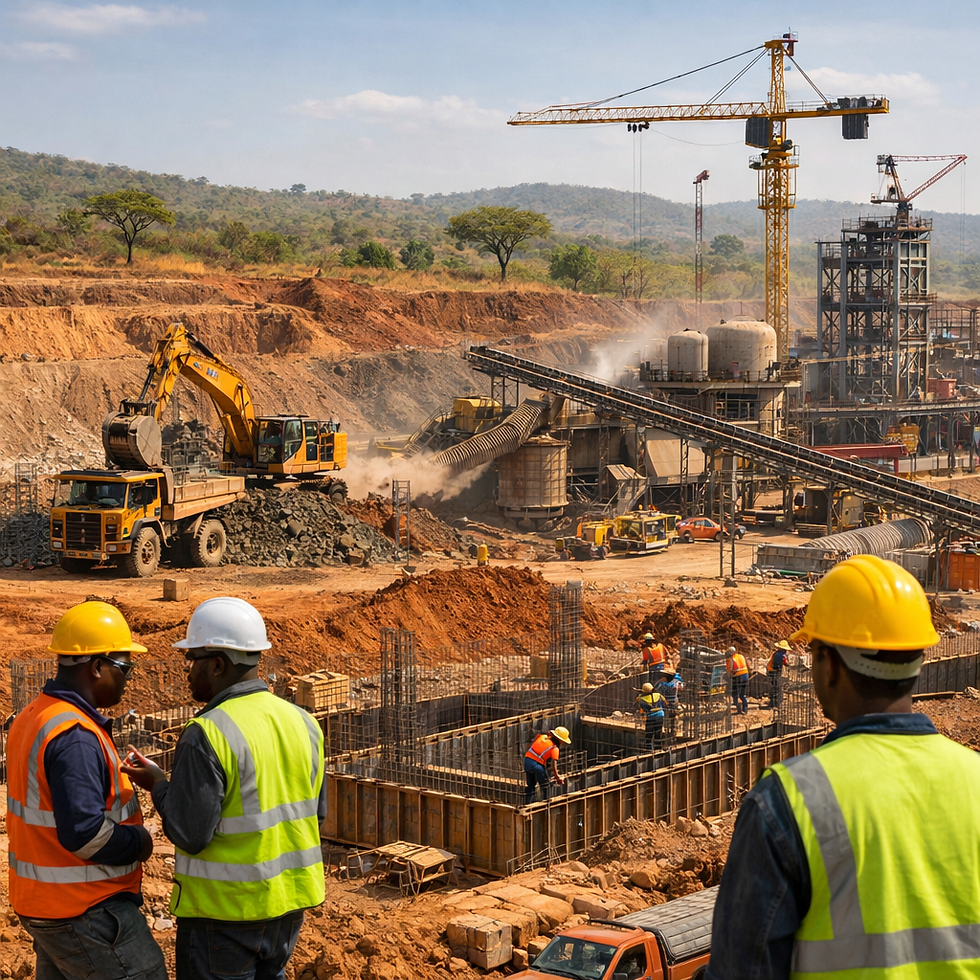
With the final investment decision (FID) reported in early March 2026, the Kobada Gold Project swiftly transitioned into its active construction phase on March 16, 2026. This rapid progression from financing to physical development speaks volumes about the project's readiness and the efficiency of the Toubani Resources team. The target for first gold production is set for Q3 2027, which means the coming months will be intensely focused on earthworks, infrastructure development, and the installation of processing facilities. This aggressive timeline presents both challenges and significant opportunities for the supply chain.
The project's technical scope is impressive, encompassing mineral resources of 2.2 million ounces along a 4.5 km strike length. The deposit is predominantly oxide and open-pittable, simplifying some aspects of the mining operation. A substantial 100,000-meter project-wide drilling program is in progress, with 60,000 meters budgeted for RC drilling in 2026, aimed at refining the mine plan and optimizing extraction. This ongoing exploration work indicates a sustained need for drilling equipment, geological services, and related consumables. Project developers and procurement teams should be aware of these detailed technical requirements when preparing their bids.
The updated mine plan anticipates near-term mining operations commencing in early 2027. This means that by late 2026 and early 2027, the demand for heavy mining equipment, operational staff, and ongoing site services will escalate dramatically. Companies specializing in mining fleet provision, maintenance, and operational support will find this period particularly ripe with potential. Keeping track of these developments through platforms like TendersGo's advanced search and filtering can provide a competitive edge, allowing businesses to anticipate needs and prepare tailored proposals.
Procurement Opportunities and Bidder Qualifications for Kobada
While the core financing for the Kobada Gold Project is secured through private agreements and financial institutions, the sheer scale of building a gold mine from the ground up generates countless procurement opportunities. As a journalist who has covered major infrastructure projects across Africa, I've seen firsthand how these "non-public" tenders often lead to a cascade of sub-contracts and supply agreements. Toubani Resources, through its exploitation vehicle Mines de Kobada SA, will require everything from heavy construction machinery and mining equipment to camp services, logistics, and specialized engineering expertise.
For potential bidders, understanding the nature of these opportunities requires a proactive approach. The project is currently in an active construction/development phase, meaning immediate needs include civil engineering contractors, earthmoving companies, and suppliers of construction materials like steel, concrete, and aggregates. As the project moves closer to its Q3 2027 production target, the focus will shift towards processing plant components, chemicals for gold extraction, and operational consumables. Companies with experience in mine site development, process plant construction, and supply chain management for remote locations will be particularly well-positioned.
Qualification requirements will undoubtedly be stringent, reflecting the high standards of a major international mining project. Expect demands for proven track records, financial stability, adherence to international safety and environmental standards, and a strong commitment to local content and community engagement. Companies will need to demonstrate their capacity to operate in the Malian context, including navigating local regulations and cultural nuances. Detailed company information pages, showcasing past projects and capabilities, can be a significant asset in attracting the attention of project developers and prime contractors – something TendersGo's organization profiles can help facilitate.
Navigating Malian Procurement Culture and Local Content
Operating in Mali requires more than just technical expertise; it demands a deep understanding of the local procurement culture. While Toubani Resources is an international entity, the project's execution vehicle, Mines de Kobada SA, operates under Malian law. This means that local content requirements, community engagement strategies, and adherence to Malian labor laws will be paramount. Companies looking to participate should be prepared to demonstrate how they will contribute to the local economy, provide training for Malian workers, and source goods and services from within Mali where feasible.
Establishing strong local partnerships is often a key to success. This could involve joint ventures with Malian companies, employing a significant local workforce, or developing local supply chains for non-specialized goods. The Malian government's approval of the project, including binding agreements on governance and development terms, signals its expectation of positive local impact. Successful bidders will be those who can articulate a clear strategy for integrating local capabilities and contributing to sustainable development in the region.
Furthermore, communication will often involve a mix of French, the official language, and local languages. While technical documentation may be in English, everyday interactions and local engagements will likely require French proficiency. Having French-speaking personnel or reliable translation services is not merely a courtesy; it is a practical necessity for effective project execution and community relations. Platforms like TendersGo's AI assistance can help bridge language barriers by summarizing documents in multiple languages, making it easier to grasp the nuances of local tenders.
Key Project Specifications and Upcoming Needs
The technical specifications of the Kobada Gold Project highlight areas where specialized suppliers and contractors will be in high demand. With 2.2 million ounces in mineral resources and an open-pittable oxide deposit, the mine plan will focus on conventional open-pit mining methods. This implies ongoing needs for drilling and blasting services, excavation, hauling, and crushing equipment. The 100,000-meter drilling program, with 60,000 meters specifically for RC drilling in 2026, points to a continuous requirement for drilling contractors and geological consultants.
Beyond mining, the processing plant will be a significant undertaking. While specific details on the plant's design haven't been widely disseminated, a gold project of this scale typically involves crushing, milling, and CIL (Carbon-in-Leach) or CIP (Carbon-in-Pulp) circuits. This translates into needs for engineering firms specializing in mineral processing, suppliers of grinding mills, leach tanks, carbon columns, and associated instrumentation and control systems. The construction of these facilities will also require experienced mechanical and electrical contractors.
Infrastructure development is another crucial aspect. Although environmental, resettlement, and infrastructure permits are secured, the actual construction of roads, power lines, water supply systems, and on-site accommodation facilities will generate numerous sub-contracts. Logistics will be a significant challenge given Mali's landlocked nature, requiring robust transportation solutions for equipment, consumables, and personnel. Companies offering logistics, freight forwarding, and customs clearance services with experience in West Africa will find opportunities here. Keeping an eye on the project's progress and the evolving needs through regular checks on platforms like TendersGo can help businesses align their offerings with upcoming requirements.
Staying Ahead: Monitoring the Kobada Gold Project on TendersGo
For any business serious about engaging with the Kobada Gold Project, proactive monitoring and strategic preparation are non-negotiable. While the primary financing is secured, the project's execution will undoubtedly lead to a continuous stream of procurement needs – from major equipment procurement to ongoing operational supplies and services. These opportunities might not always appear as large, standalone government tenders, but rather as direct requests for proposals from Toubani Resources, Mines de Kobada SA, or their prime contractors.
This is where a tool like TendersGo becomes invaluable. With its global reach and advanced search capabilities, businesses can set up unlimited email alerts specifically for tenders and procurement notices related to "Kobada Gold Project," "Mines de Kobada SA," or even broader terms like "Mali mining equipment" or "West Africa construction." The platform's ability to search across 220+ countries and analyze documents in 145 languages, often with AI-powered summaries, means that no potential opportunity goes unnoticed, regardless of where it's published or the language it's in.
Furthermore, TendersGo's B2B global marketplace and organization profiles allow companies to not only find opportunities but also to be found. By creating a comprehensive profile, businesses can showcase their capabilities, certifications, and past project experience, making it easier for prime contractors or Toubani Resources itself to identify suitable partners. As the Kobada Gold Project moves rapidly towards its Q3 2027 production target, staying informed and connected through such platforms will be key to unlocking the numerous procurement possibilities this significant Malian investment presents.