
Qatar Airways Runway 1R Project: $180M Upgrade

The global aviation sector is constantly evolving, with airports worldwide investing heavily in infrastructure to meet increasing demand and enhance operational efficiency. While many eyes are on emerging markets, established hubs are also undergoing significant upgrades. A notable project currently underway, though not in the Middle East as some might initially assume, is the substantial rehabilitation of Runway 1R/19L at San Francisco International Airport (SFO). This critical infrastructure upgrade, valued at $180 million, underscores the ongoing commitment to maintaining high safety standards and operational fluidity at major international gateways.
For bid managers, export managers, and procurement officers tracking global infrastructure opportunities, understanding the intricacies of such projects is essential. While this particular contract has been awarded, its scope and funding mechanisms offer valuable insights into future airport development tenders. The project highlights how large-scale airport maintenance and enhancement efforts are financed and executed, providing a template for upcoming opportunities across various continents. Companies looking to participate in similar ventures need to be aware of the detailed planning, significant financial backing, and often complex logistical considerations involved.
San Francisco International Airport’s Runway 1R/19L Revitalization: An Overview
San Francisco International Airport (SFO) is undertaking a major rehabilitation project for its Runway 1R/19L, a critical component of its operational infrastructure. This extensive upgrade, carrying a total construction cost of $180 million, is not merely a repaving exercise but a comprehensive enhancement designed to extend the runway's lifespan and improve overall safety and efficiency. The project demonstrates the continuous investment required to keep major international airports at the forefront of aviation technology and capacity.
The Federal Aviation Administration (FAA) has committed a significant sum to this endeavor, providing US$92.1 million in funding. This substantial federal contribution underscores the national importance of SFO as a key air travel hub and the FAA's role in supporting critical airport infrastructure across the United States. Such large-scale funding often signals a project's strategic relevance and can provide a benchmark for how similar projects might be financed elsewhere, particularly for those tracking tenders with governmental backing.
Project Scope and Contractor Details
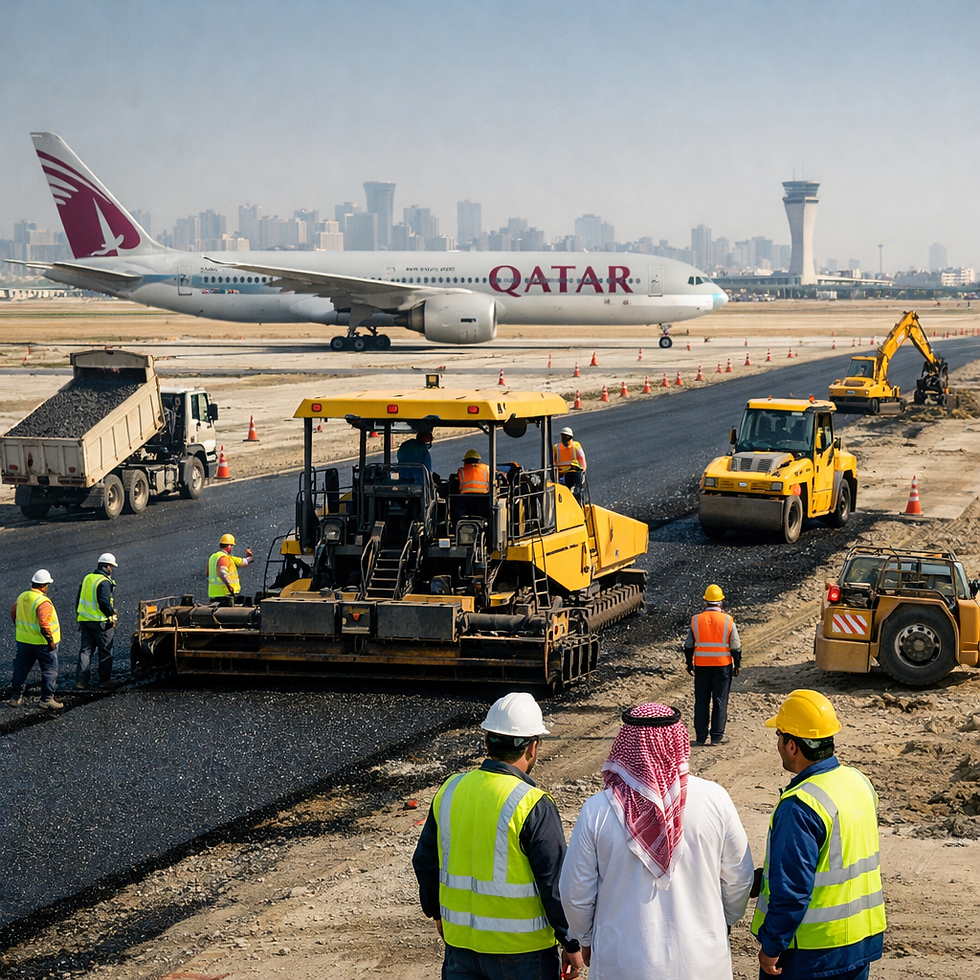
The scope of work for the SFO Runway 1R/19L project is extensive, encompassing several critical upgrades. The primary task involves repaving the entire surface layer of the runway, a fundamental requirement for maintaining aircraft safety and operational smoothness. Beyond the runway itself, significant improvements are being made to adjacent taxiways, which are vital for efficient ground movement of aircraft. This integrated approach ensures that the entire operational area functions cohesively.
Further enhancements include upgrading the existing lighting systems, a crucial element for all-weather operations and night landings, along with the precise repainting of runway striping and markings. These markings are essential for pilot guidance and adherence to international aviation standards. Additionally, the project involves taxiway reconfiguration to support seamless operations during the construction period, a testament to the meticulous planning required for such a high-impact undertaking. The contract for this substantial work was awarded to Granite Construction Company on May 6, 2025, following a competitive procurement process, demonstrating their expertise in large-scale infrastructure projects. This award signifies the completion of the tender phase for this specific project, but the detailed breakdown of the work offers a clear picture of what similar future tenders might entail.
The Project Timeline and Operational Adjustments
Executing a project of this magnitude at a major international airport like SFO requires precise planning and careful management of operational impacts. The runway closure began on March 30, 2026, marking the start of the active rehabilitation phase. This six-month window is dedicated to intense construction activities, aiming for an expected reopening on October 2, 2026. Such tight timelines are common in airport infrastructure projects, where every day of closure can translate into significant operational costs and passenger inconvenience.
To mitigate disruptions during the closure of Runway 1R/19L, SFO has implemented a comprehensive operational adjustment plan. Flights are being strategically shifted to runways 28L and 28R, which will absorb the majority of the air traffic. Furthermore, Runway 1L has been repurposed to function as a taxiway, ensuring that ground movements remain efficient despite the reduced runway availability. Airport authorities anticipate that these measures will keep flight delays to a minimum, with expectations of less than 10% of flights experiencing delays, most of which are projected to be under 30 minutes. This level of detail in planning is crucial for any organization bidding on airport projects, as understanding and proposing solutions for operational continuity is often a key evaluation criterion.
Companies looking to track future airport development projects, whether for infrastructure upgrades or operational technology enhancements, can find valuable resources on platforms like TendersGo . With its extensive database covering 220+ countries and tenders in 145 languages, it's an indispensable tool for identifying upcoming opportunities. Setting up unlimited email alerts for specific keywords or sectors, such as "airport construction" or "aviation infrastructure," can ensure that no potential tender goes unnoticed.
Funding Mechanisms and Procurement Insights
The SFO Runway 1R/19L project is a prime example of how major airport infrastructure development is funded in the United States. The total construction cost of $180 million is significantly bolstered by a US$92.1 million grant from the Federal Aviation Administration (FAA). This substantial federal contribution comes through airport improvement funding, a common mechanism for supporting critical upgrades at airports nationwide. Understanding these funding streams is vital for businesses looking to engage in public sector projects, as it often dictates the procurement processes and compliance requirements.
While the tender for this specific project has already been completed, with the contract awarded to Granite Construction Company, the procurement journey offers valuable lessons. Such projects typically involve rigorous qualification criteria, demanding extensive experience in large-scale civil engineering, adherence to strict safety standards, and proven financial stability. Bid managers should take note of the transparency and detailed documentation often associated with FAA-backed projects, including comprehensive environmental impact assessments and community engagement plans. Leveraging tools like TendersGo's organization profiles and company information pages can provide competitive intelligence on past winners and their capabilities, helping to refine future bidding strategies.
Navigating Future Aviation Procurement Opportunities
Although the SFO Runway 1R/19L project's primary contract has been awarded, the aviation sector remains a fertile ground for new procurement opportunities globally. The continuous need for maintenance, upgrades, and expansion means that airports are constantly tendering for goods, services, and construction works. For suppliers and contractors, staying informed about upcoming projects is key to securing new business. This includes not only major runway projects but also smaller, yet significant, tenders for air traffic control systems, terminal enhancements, baggage handling solutions, and security technology.
When preparing for future tenders in the aviation sector, bidders should focus on several critical aspects. First, understanding the local regulatory environment and procurement culture is paramount. Each country and even individual airport authority might have unique requirements for pre-qualification, bid submission, and contract execution. Second, demonstrating a strong track record of similar projects, especially those completed on time and within budget, is often a deciding factor. Providing comprehensive documentation, including detailed project plans, financial statements, and references, is standard practice.
Third, for international ventures, language capabilities and local partnerships can be highly advantageous. While English is often the working language for international tenders, having local representatives or consortium partners can provide invaluable insights and facilitate communication. Platforms like TendersGo offer an advanced search and filtering system, allowing users to pinpoint tenders by CPV/NAICS/UNSPSC classification, location, and agency, making it easier to identify relevant opportunities worldwide. The AI-powered summaries and PDF document viewer can also help quickly assess tender documents, even those in foreign languages, saving valuable time in the initial qualification stages.
Key Documents and Qualification Requirements for Aviation Tenders
Participating in large-scale aviation infrastructure tenders, such as runway rehabilitation or airport expansion projects, demands meticulous preparation and a thorough understanding of the required documentation. While specific requirements vary by project and issuing authority, a common set of documents and qualifications are generally expected. First and foremost, bidders must provide comprehensive company registration documents, including proof of legal entity status, tax compliance, and any necessary business licenses. Financial stability is often assessed through audited financial statements for the past three to five years, demonstrating the company's capacity to undertake projects of significant value.
Technical qualifications are equally critical. This typically involves submitting detailed resumes of key personnel, outlining their experience in similar projects, and providing evidence of adherence to relevant industry standards and certifications, such as ISO certifications for quality management or environmental compliance. Experience is often quantified by requiring a list of successfully completed projects of similar scope and complexity, complete with client references and contract values. Furthermore, for construction projects, proof of adequate insurance coverage—including professional indemnity, public liability, and workers' compensation—is mandatory to mitigate risks.
In the context of international tenders, language proficiency can also be a hidden hurdle. While tender documents are often provided in English, local regulations or specific project nuances might require submissions in the local language. This is where TendersGo , with its ability to search across 145 languages and provide AI-powered summaries, becomes an invaluable asset for bid managers. The platform also allows for saved searches, ensuring that relevant tenders are automatically flagged, and unlimited email alerts keep procurement teams informed of new opportunities as they arise, whether for runway upgrades, terminal construction, or air traffic control system procurements. The B2B global marketplace feature also provides an avenue to connect with potential partners or suppliers, enhancing a company's bidding capabilities on an international scale.
Looking Ahead: The Future of Airport Infrastructure Investment
The SFO Runway 1R/19L project, while specific to a US location, reflects a broader global trend in airport infrastructure investment. Across the world, airports are facing increasing passenger volumes, evolving security threats, and the imperative to reduce environmental impact. These pressures drive continuous investment in both new construction and the rehabilitation of existing facilities. From new terminals in Asia to expanded cargo facilities in Europe, and modernized air traffic control systems across Africa, the demand for specialized goods, services, and expertise in the aviation sector remains robust.
For organizations intent on securing contracts in this dynamic environment, the ability to identify, analyze, and respond to tenders efficiently is paramount. This includes not only understanding the technical requirements but also the geopolitical and economic factors influencing investment decisions in different regions. The detailed planning and execution seen at SFO serve as a valuable case study for how complex airport projects are managed, funded, and brought to fruition. Staying abreast of these developments, leveraging advanced search tools, and building robust internal capabilities will be key for any company looking to thrive in the competitive landscape of global aviation procurement.


