
Tokelau Community Safety Partnership: NZ Fire and Emergency 2026 Security Initiative

Tokelau, a remote Pacific island nation, is currently at the forefront of a significant safety initiative, driven by a partnership with New Zealand. The "Strengthening Community Safety in Tokelau through Partnership (Fire Safety Programme)" marks a critical step in enhancing the archipelago's resilience against disasters. As of 2026, this program, spearheaded by the New Zealand Ministry of Foreign Affairs and Trade (MFAT) and Fire and Emergency New Zealand, is actively rolling out essential fire safety infrastructure across the three atolls of Fakaofo, Nukunonu, and Atafu. This concerted effort underscores a broader commitment to Tokelau's long-term security and disaster preparedness, integrating local needs with international expertise to bolster civil defense coordination.
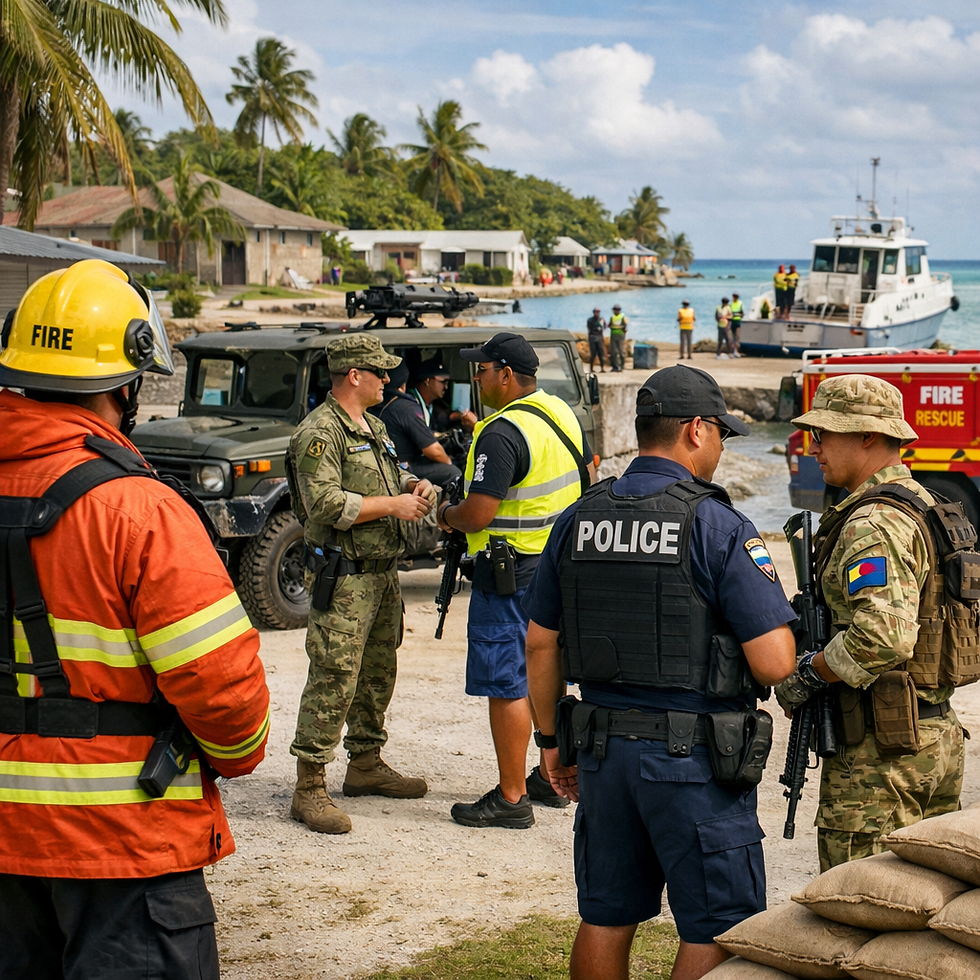
For procurement professionals, export managers, and bid managers, understanding the nuances of such initiatives is crucial. While the primary procurement phase for this specific program has concluded, the ongoing nature of broader resilience efforts in the Pacific, particularly around Tokelau community safety and defense infrastructure, suggests future opportunities. Staying informed about these developments, perhaps through platforms like TendersGo , which offers advanced search and filtering for projects in over 220 countries, can provide a competitive edge.
A Nation-Wide Push for Fire Safety in 2026
The year 2026 sees the active implementation and rollout of what is being described as the largest home-fire-safety initiative Tokelau has ever undertaken. This program's core deliverable is the distribution of 300 residential smoke alarms across the nation's three atolls. Imagine the logistical effort involved in transporting and deploying these vital safety devices to such remote locations, highlighting the complex coordination between various agencies.
Beyond smoke alarms, the initiative also includes the supply of ancillary firefighting equipment. This comprises suction hoses, strainers, lay-flat hoses, and branches/nozzles. The strategic intent here is clear: to augment the existing portable pumps on each atoll, ensuring each community has a complete and functional basic firefighting capability. This isn't just about providing equipment; it's about empowering local communities with the tools to respond effectively to emergencies, a cornerstone of genuine disaster preparedness.
The journey to this 2026 milestone began with careful planning and coordination. The New Zealand Government, through MFAT, is the primary funding source, channeling development assistance to this vital bilateral partnership. Fire and Emergency New Zealand provides the technical expertise, ensuring that the equipment and training are appropriate for Tokelau's unique environment. Crucially, the Samoa Fire and Emergency Service Authority offers in-country implementation and on-ground support, demonstrating a regional collaborative spirit that is common in Pacific development projects. The Tokelau Government, naturally, acts as the vital local partner, ensuring the program aligns with community needs and cultural contexts.
The Broader Context of Pacific Resilience
This fire safety program doesn't exist in isolation. It's an integral part of a much larger, coordinated effort to enhance Pacific Island security resilience. The "Weather Ready Pacific (WRP) Programme" frames many of these initiatives, funded by UK WISER and led by the Secretariat of the Pacific Regional Environment Programme (SPREP).
A recent multi-agency visit to Tokelau on April 29, 2026, underscored this broader framework. This mission involved UN agencies, regional scientific bodies, and both the Samoa and Tokelau governments. Their focus areas were expansive: climate change resilience, disaster risk management, sustainable development, and critical infrastructure and asset verification, including waste disposal coordination. This holistic approach recognizes that community safety extends beyond immediate emergencies to encompass environmental and developmental factors.
For those looking to engage in future Pacific development, understanding these interconnected initiatives is key. Projects often overlap, and a successful bid manager recognizes how a specific tender might fit into a larger regional strategy. Platforms like TendersGo can help professionals track these broader programs and identify potential niches for their services or products.
Procurement Insights: What We Know About Tenders
For this specific "Strengthening Community Safety in Tokelau" program, the procurement phase for the smoke alarms and ancillary firefighting equipment is complete. The equipment has been delivered and rolled out, meaning no open tenders are currently identified for these items within this particular initiative. The supply chain was managed to get the necessary gear to Tokelau efficiently.
However, this doesn't mean opportunities are non-existent in the broader Tokelau disaster preparedness and defense sector. While direct tenders for the current fire safety program are closed, the ongoing nature of the Weather Ready Pacific Programme, the infrastructure and asset verification efforts, and the governance capacity building initiatives suggest a continuous need for various goods and services. For instance, the UNDP has been supporting governance capacity building for Tokelau's Taupulega (village councils) since March 2025, an ongoing effort that might require training materials, logistical support, or consulting services.
Bid managers should keep an eye on announcements from the New Zealand Ministry of Foreign Affairs and Trade (MFAT), SPREP procurement notices, and the Samoa Fire and Emergency Service Authority tender boards. Setting up unlimited email alerts for Tokelau and Pacific region tenders on TendersGo can ensure you don't miss future opportunities related to civil defense coordination and resilience building. The platform's ability to filter by country, sector, and even CPV/NAICS/UNSPSC classification codes can be invaluable for pinpointing relevant calls for bids.
Technical Specifications and Impact
The technical specifications for the distributed equipment are straightforward yet impactful. The 300 residential smoke alarms are standard household units, designed for easy installation and to provide early warning in case of fire. This simple technology can dramatically reduce casualties and property damage in remote communities where professional fire services might be delayed.
The ancillary firefighting equipment—suction hoses, strainers, lay-flat hoses, and branches/nozzles—is designed to integrate with pre-existing portable pumps on each atoll. This approach is resource-efficient, leveraging existing assets while enhancing their overall functionality to create a "complete and functional basic firefighting capability." It's a pragmatic solution for a small island nation, focusing on fundamental emergency response rather than complex, high-tech systems.
The social impact of this initiative is profound. It directly enhances community fire safety awareness and provides household-level fire prevention capabilities. Furthermore, by equipping local communities, it fosters capacity building for local emergency response teams. Environmentally, the project aligns with Tokelau's broader climate resilience objectives and integrates seamlessly into the disaster risk reduction framework, supporting a vulnerable Pacific Island community's adaptation efforts.
Key Stakeholders and Collaboration
The success of the Tokelau Community Safety Partnership hinges on robust collaboration among several key stakeholders. Fire and Emergency New Zealand, as the technical partner, brings invaluable expertise in fire safety protocols and equipment standards. The Samoa Fire and Emergency Service Authority acts as the vital implementation partner, providing on-the-ground support and understanding of the local context.
The New Zealand Ministry of Foreign Affairs and Trade (MFAT) plays a dual role as the primary funding body and overall coordinator, ensuring the project aligns with New Zealand's foreign policy objectives and development assistance goals. Regionally, SPREP's involvement in the broader Weather Ready Pacific Programme provides an overarching framework for resilience building. Naturally, the Tokelau Government is the essential local authority, ensuring the project meets the specific needs and aspirations of its people.
Understanding these relationships is crucial for any organization looking to participate in future projects in the region. Identifying the lead agencies and their respective roles can help in tailoring proposals and understanding the procurement landscape. For example, knowing that MFAT is a key coordinator suggests that future opportunities might be advertised through New Zealand government channels, or via development portals that aggregate such announcements. Using TendersGo AI assistance can help sift through vast amounts of data to identify these critical links and potential pathways for engagement.
Connecting to Future Opportunities
While the immediate procurement for the 2026 fire safety program is concluded, the ongoing nature of development in Tokelau and the wider Pacific region means that new opportunities will undoubtedly arise. The governance capacity building initiative, supported by UNDP since March 2025, suggests requirements for consulting services, training modules, or even digital solutions for local administration. The infrastructure and asset verification, part of the April 2026 joint mission, could lead to tenders for engineering services, construction, or specialized equipment for structural assessments.
The broader climate resilience and disaster risk management initiatives under the WRP programme are multi-year endeavors, implying a sustained demand for expertise in areas like climate modeling, early warning systems, coastal protection, and sustainable resource management. Companies with experience in these fields, particularly those familiar with small island developing states (SIDS) contexts, should actively monitor these developments.
For those aiming to participate in such vital projects, proactive engagement is key. While public sources might not always disclose budget details or specific completion dates, the overarching commitment from New Zealand and regional bodies to Tokelau's security and resilience is clear. Keeping track of official announcements from MFAT and SPREP, and utilizing a comprehensive tender search engine like TendersGo with its advanced search capabilities , allows businesses to stay ahead. Registering for unlimited email alerts specifically for Tokelau or broader Pacific tenders can ensure you're among the first to know when new procurement cycles begin, helping you prepare your organization profiles and company information pages on platforms like TendersGo for future bids.





