Croatia Signs €279M Rail Contract for Zagreb-Karlovac Upgrade in 2026

Croatia has officially embarked on a significant railway modernization effort, with a substantial contract signed on April 17, 2026. This landmark agreement, valued at an impressive €278.8 million (excluding VAT), marks a critical phase in upgrading the nation’s rail infrastructure, specifically targeting the vital Zagreb-Karlovac section. The project, involving the Spanish firm COMSA S.A., is poised to transform a 44-kilometre stretch of railway, promising enhanced connectivity and efficiency along the crucial Zagreb–Rijeka (M202) line. For bid managers, export managers, and procurement officers globally, this represents not just a construction project, but a nexus of future opportunities within Croatia’s burgeoning infrastructure sector.
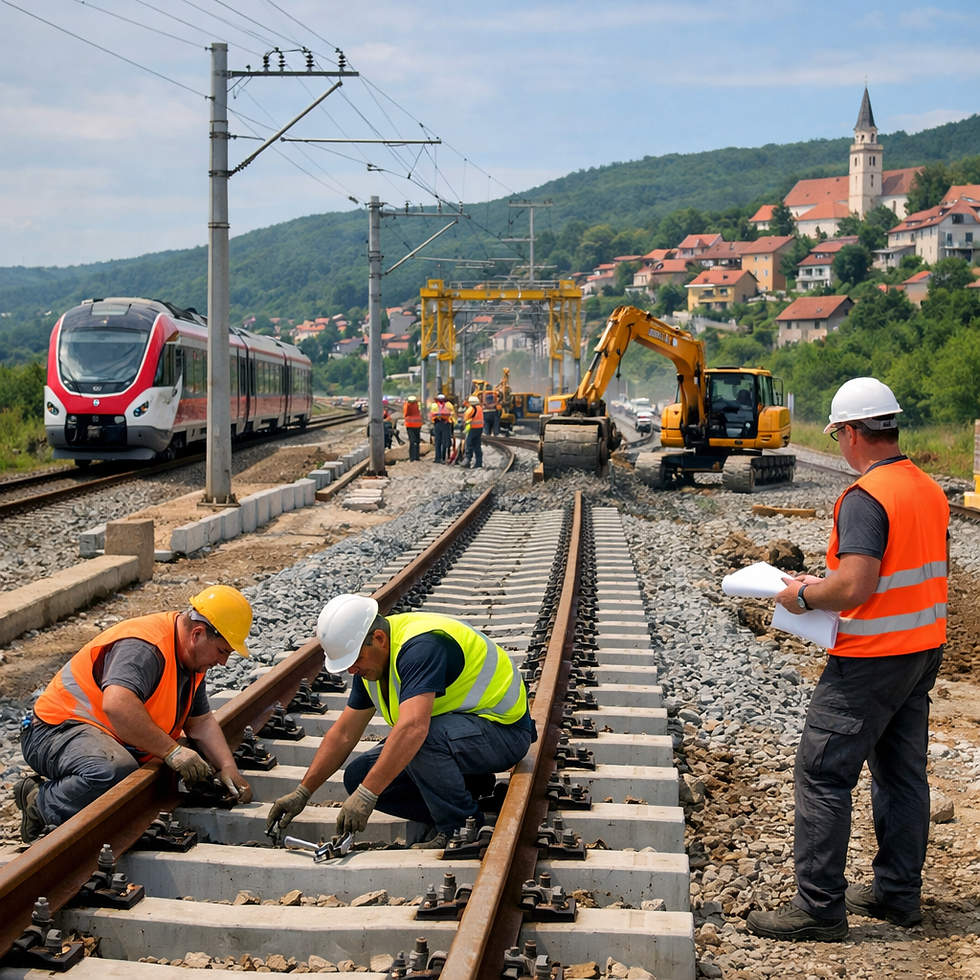
The ambitious undertaking is slated to commence in the summer of 2026, with a targeted completion date of 2029. This multi-year endeavor will see the current single-track, unelectrified line evolve into a modern, double-track, electrified railway capable of supporting higher speeds and increased traffic. Such projects are a clear indicator of a nation’s commitment to economic development and regional integration, and they invariably open doors for a wide array of suppliers, consultants, and specialized service providers.
The €279 Million Zagreb-Karlovac Rail Transformation Takes Flight
The official project, aptly named “Reconstruction, Doubling and Electrification of the M202 Hrvatski Leskovac–Karlovac Section,” is more than just an upgrade; it’s a complete overhaul. The €278.8 million contract (excluding VAT, or €348.5 million including VAT) was secured by COMSA Corporación, a prominent Spanish firm, underscoring the international interest and expertise drawn to Croatia’s infrastructure ambitions. This particular section, stretching between Hrvatski Leskovac and Karlovac, is a linchpin in Croatia’s railway network.
The scope of work is extensive. It includes the doubling of the existing single track, a complete reconstruction of the railway infrastructure, the installation of new 25 kV AC electrification systems, and the deployment of advanced ETCS Level 1 signalling. These technical specifications are crucial for anyone considering future sub-contracting or supply opportunities. The goal is to elevate the design speed to 160 km/h, a significant leap from its current operational limitations. This project is a tangible piece of Croatia’s larger vision to invest €3.5 billion in its rail infrastructure by 2030, with €318 million specifically allocated for rail modernization in 2026 alone. Keeping an eye on these developments, perhaps through a platform like TendersGo , can provide an edge in identifying upcoming tenders.
Hrvatski Leskovac–Karlovac: A Strategic Corridor’s Evolution
This particular section of the M202 line holds immense strategic importance. It forms a critical part of the TEN-T Mediterranean Corridor, a transnational network designed to facilitate efficient movement of goods and people across Europe. Modernizing this segment is not merely about domestic travel; it’s about strengthening Croatia’s role within the broader European logistics and transport framework. The implementing agency, HŽ Infrastruktura (Croatian Railway Infrastructure Manager), has a clear mandate to ensure this project not only meets but exceeds international standards.
The anticipated impact on travel times is dramatic. The upgrade aims to slash the journey duration between Zagreb and Rijeka from a current three hours down to a mere one hour and fifteen minutes. Imagine the economic implications of such a reduction for freight transport and the boost to tourism. For companies specializing in railway components, signaling systems, electrification solutions, or even project management consulting, this project’s detailed scope offers a roadmap for identifying potential entry points. Organizations can also create their profiles on TendersGo to showcase their capabilities for future collaborations.
Funding, Timelines, and the European Connection
Understanding the financial backbone of such a massive project is key for any prospective bidder. The Croatian government has secured significant European Union funding, with 85% of the project cost covered by the EU’s Competitiveness and Cohesion Programme 2021–2027. The remaining 15% comes from the Croatian State Budget. This blend of national and EU funding typically implies adherence to stringent procurement guidelines and a high degree of transparency, which can be both challenging and reassuring for international bidders.
With construction set to begin in the summer of 2026 and a three-year duration, the project is expected to reach completion by 2029. This timeline provides a clear window for planning and preparation for businesses looking to participate, whether directly or through sub-contracting. Keeping track of specific tender announcements from HŽ Infrastruktura will be crucial. Platforms offering unlimited email alerts for tenders in Croatia can be invaluable here, ensuring no opportunity is missed.
Navigating Croatian Procurement: What You Need to Know
Participating in large-scale infrastructure projects in Croatia, particularly those with EU funding, requires a clear understanding of the procurement landscape. HŽ Infrastruktura, as the implementing agency, will likely follow standard EU procurement directives and national regulations. This typically involves open tender procedures, competitive dialogue, or restricted procedures, depending on the specific nature of the sub-contracts or supply needs.
For international companies, key qualification requirements often include demonstrating financial stability, relevant technical expertise, and a proven track record in similar projects. Documentation like company registration, financial statements, certificates of experience, and quality management certifications (e.g., ISO) are usually mandatory. Language proficiency in Croatian, or at least professional translation services, will be essential for navigating tender documents and legal frameworks. Many agencies also require proof of adherence to environmental and social standards, reflecting the EU’s broader policy objectives. Utilizing tools like TendersGo AI Assistance for quick summaries of complex tender documents in 145 languages can significantly streamline the initial assessment process.
Essential Documents for Bidders
When preparing to bid on Croatian infrastructure projects, a standard set of documents will almost certainly be required. This usually includes:
Company Registration Documents: Proof of legal establishment in your home country.
Financial Statements: Audited financial reports for the past 2-3 years to demonstrate financial capacity.
Bank References: Letters from financial institutions confirming creditworthiness.
Experience Certificates: Details of similar projects completed, including contract values, client references, and project descriptions.
Technical Personnel Qualifications: CVs and certifications of key staff proposed for the project.
Quality Management Certifications: ISO 9001, ISO 14001, and potentially ISO 45001 for health and safety.
Environmental and Social Responsibility Policies: Demonstrating compliance with EU and national sustainability standards.
Joint Venture/Consortium Agreements: If bidding as part of a group, clear agreements outlining roles and responsibilities.
Deadlines are always strict in public procurement. Missing a submission deadline, even by a minute, typically results in disqualification. Therefore, meticulous planning and proactive engagement with the tender process are paramount. Regularly checking HŽ Infrastruktura's official procurement portal and setting up targeted searches on platforms like TendersGo with advanced filtering for specific CPV codes related to railway construction, electrification, and signaling will be critical for staying informed.
Sub-Contracting and Supply Chain Opportunities
While COMSA S.A. holds the primary contract, a project of this scale inevitably creates a ripple effect of sub-contracting and supply chain opportunities. From earthworks and civil engineering to specialized railway equipment, signaling components, and electrification materials, numerous niches will open up. Local Croatian companies will certainly play a significant role, but international suppliers with specialized products or services often find a gateway through these secondary opportunities.
Companies specializing in railway sleepers, ballast, rails, overhead catenary systems, power supply equipment, telecommunications, and specific safety systems should closely monitor the project’s progress. Even after the main construction phase, there will be ongoing needs for maintenance, spare parts, and operational support. Building relationships with COMSA S.A. and key Croatian suppliers and contractors could be a strategic move. The TendersGo B2B global marketplace can be a useful tool for identifying potential partners and showcasing your company's offerings within this ecosystem.
Looking Ahead: Croatia's Rail Vision Beyond 2029
The Hrvatski Leskovac–Karlovac upgrade is a cornerstone of Croatia's broader rail modernization strategy. It’s not an isolated project but rather a crucial piece of a much larger puzzle aimed at integrating Croatia more tightly into European transport networks and boosting its economic competitiveness. The €3.5 billion investment plan by 2030 signals a sustained commitment to rail infrastructure, meaning that opportunities will continue to emerge long after 2029.
For export managers and project developers, understanding this long-term vision is key. It’s about cultivating relationships, demonstrating reliability, and being prepared for successive phases of development. The successful execution of projects like the Zagreb-Karlovac upgrade will build confidence and pave the way for further investments, making Croatia a compelling target market for businesses in the rail and infrastructure sectors for years to come. Staying informed through comprehensive platforms that track tenders across 220+ countries and offer advanced search capabilities will be indispensable for capturing these future prospects.