
Belarus Affordable Medical Care with Belarusbank Ambulance Project 2026

Belarus is making significant strides in modernizing its healthcare infrastructure, particularly in rural areas, through a unique initiative spearheaded by Belarusbank. The "Affordable Medical Care with Belarusbank" project, now in its second phase for 2026, aims to bolster emergency medical services by deploying new, locally manufactured ambulances to regions where they are most needed. This isn't a typical government tender; it's a direct sponsorship and investment model, setting an interesting precedent for how critical infrastructure can be developed.
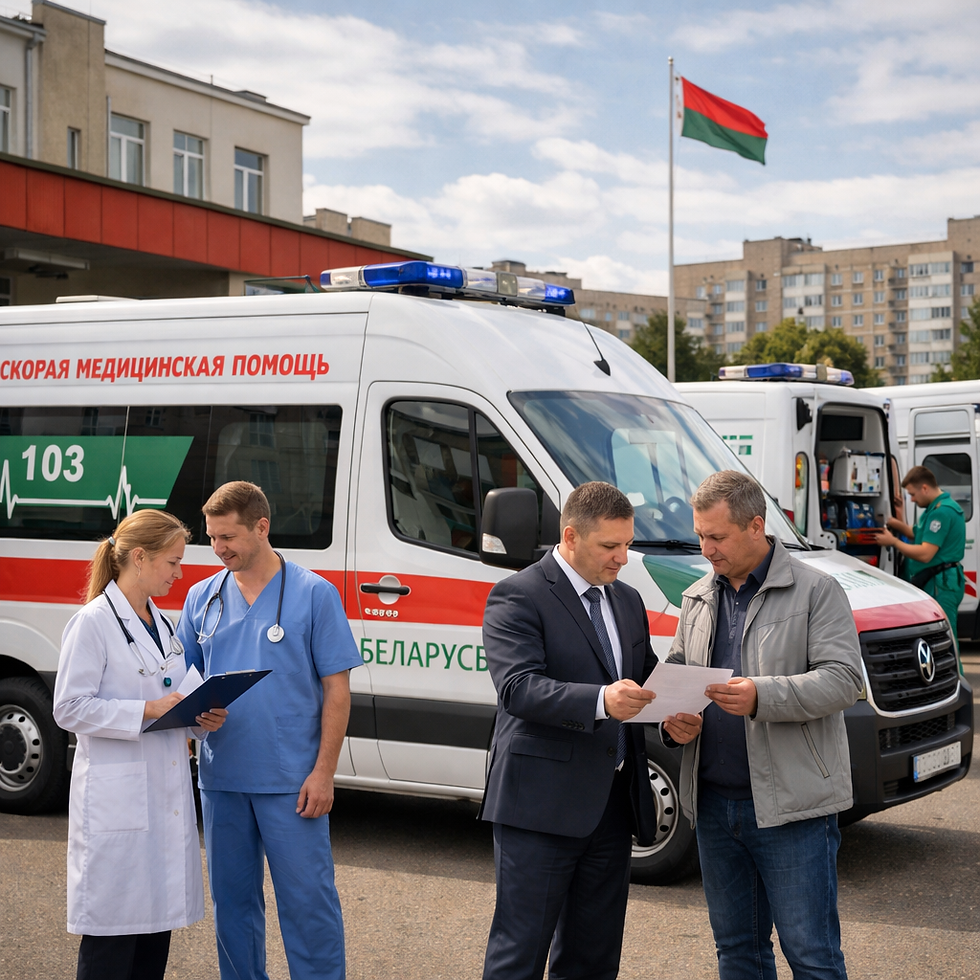
For bid managers, export managers, and procurement officers globally, understanding these nuanced approaches to procurement is essential. While many might expect to find a competitive tender for such a large-scale project, Belarusbank's initiative highlights a different pathway to market access, one built on strategic partnerships and social responsibility. This project is a prime example of how to track significant healthcare investment in Belarus, even outside traditional tender portals. Those interested in the Belarus ambulance procurement 2026 landscape, or the broader Belarus medical vehicle investment, would do well to pay close attention.
Belarusbank's Social Investment: A New Model for Healthcare Procurement
The "Affordable Medical Care with Belarusbank" project is not just another procurement drive; it represents the seventh socially oriented initiative from Belarusbank, demonstrating a sustained commitment to national development. This project directly addresses the critical need for reliable emergency transport in rural areas and small towns across Belarus. The bank, a state-owned entity, is channeling its corporate social responsibility budget directly into the procurement of medical vehicles, bypassing the lengthy competitive bidding processes often associated with public sector acquisitions. This direct investment model allows for quicker deployment of essential services, which is particularly vital for emergency healthcare.
The initial phase, completed in 2025, saw the successful delivery of 12 new medical ambulances. These vehicles, manufactured by Belarusian company MAZ-Kupava, were strategically distributed with two vehicles allocated to each of Belarus's six regions. This targeted approach ensures that the impact is felt where it matters most – in remote medical facilities that have historically struggled with outdated or insufficient transport options. Belarusbank's commitment to healthcare improvements is substantial, with over 4 million rubles allocated over the past decade, underscoring the scale of their long-term vision.
Project Scope and Strategic Objectives for 2026
The core objective of this initiative remains steadfast in 2026: to enhance access to emergency medical care in underserved rural areas and small towns. The project explicitly targets locations where ambulance availability is low or existing fleets are beyond their operational lifespan. By focusing on these specific demographics, the Ministry of Health and Belarusbank aim to significantly reduce emergency response times and ultimately improve health outcomes for citizens residing in remote parts of the country.
The choice of vehicle manufacturer, MAZ-Kupava, is also strategic. These Belarusian-made medical ambulances are specifically designed to handle the challenging terrain often encountered on unpaved rural roads, featuring enhanced suspension and off-road capabilities. This focus on locally produced solutions not only supports the national economy but also ensures supply chain reliability and cost efficiency, crucial factors for a sustainable healthcare infrastructure. Furthermore, these MAZ-Kupava vehicles are equipped to integrate standard emergency medical equipment—such as ventilators, monitors, and defibrillators—all in line with the Ministry of Health's rigorous standards. This ensures that the new ambulances are not just transport vehicles but fully functional mobile medical units.
Key Stakeholders and Their Roles in the Initiative
Understanding the interplay between the primary stakeholders is crucial for anyone looking to engage with Belarus's healthcare sector, particularly concerning the Belarusbank health care infrastructure project. At the heart of this initiative is Belarusbank , acting as the primary investor and sponsor. As a state-owned banking entity, its commitment to social projects like this ambulance procurement is significant, having allocated over 4 million rubles to healthcare infrastructure improvements over the last decade. Their consistent investment highlights a strategic alignment with national social development goals, extending beyond traditional financial services.
The Ministry of Health of the Republic of Belarus serves as the key recipient and ultimately the distributor of these vital medical vehicles. Levshukova Olga, Head of the Procurement, Medical Devices and Healthcare Facility Modernization Regulatory Department, played a pivotal role in signing the agreement with Belarusbank to launch this initiative. Her department is responsible for managing the subsequent distribution of these ambulances to regional health departments, ensuring they reach their intended destinations in rural clinics and small-town hospitals. For those seeking information on broader Belarus Ministry of Health tenders 2026, contacting the Ministry directly, perhaps through their regulatory department at +375 17 377 41 72, would be a logical first step, though this particular project operates outside the typical tender framework.
Finally, MAZ-Kupava stands as the crucial manufacturer in this equation. As a Belarusian company, their role aligns with the national strategy of utilizing local production capabilities. They are responsible for delivering specialized medical ambulances tailored to the unique logistical demands of the Belarusian countryside. Their expertise in manufacturing rugged vehicles suitable for remote terrain is a cornerstone of the project's success in improving rural healthcare ambulance procurement in Belarus.
Navigating Procurement Beyond Traditional Tenders
For international suppliers and bid managers accustomed to competitive bidding, the Belarusbank project offers a different perspective on market entry. While the Ministry of Health does issue standard competitive tenders for various medical supplies and equipment, this particular ambulance procurement operates on a direct sponsorship model. This means that Belarusbank directly funds and selects the manufacturer, MAZ-Kupava, for these specific vehicles, bypassing the open tender process.
This distinction is critical. If your company manufactures medical vehicles, especially specialized ambulances, understanding such direct investment models can open different avenues for engagement. Instead of waiting for a public tender, companies might explore partnership opportunities with state-owned enterprises or banks involved in corporate social responsibility initiatives. While this particular project is an existing agreement, it signals a broader trend where strategic national investments might not always follow the conventional tender route. Keeping an eye on government financial institutions and their social programs could reveal future procurement opportunities.
For those looking for more conventional and competitive public procurement opportunities in Belarus, platforms like TendersGo offer extensive listings. With its advanced search and filtering capabilities, you can quickly find relevant tenders from across 220+ countries. The platform allows you to set up unlimited email alerts for specific keywords or CPV/NAICS/UNSPSC classification codes, ensuring you never miss an opportunity, even for something as specific as rural healthcare ambulance procurement Belarus.
Timeline, Deployment, and Future Outlook for 2026
The "Affordable Medical Care with Belarusbank" project has a clear timeline and a forward-looking perspective. Its roots can be traced back to broader initiatives aimed at strengthening Belarus's healthcare system, such as the €90 million IBRD loan signed in June 2020 for COVID-19 response, which included ambulance procurement. This set a precedent for significant bank and health ministry partnerships.
The first tangible phase of the Belarusbank project reached its completion in late 2025 with the delivery of 12 MAZ-Kupava ambulances. These vehicles were swiftly deployed to rural clinics, marking a significant upgrade to their emergency response capabilities. As we move through 2026, the project remains active, focusing on further fleet modernization. The Ministry of Health continues to play a vital role in coordinating the integration of these new vehicles into the national emergency response networks, ensuring optimal utilization and impact.
While no new competitive tender is expected for this specific phase of the Belarusbank initiative, given its sponsorship nature, the success of this model suggests potential for future expansions or similar projects. Companies should monitor announcements from both Belarusbank and the Ministry of Health's regulatory department for any indications of follow-on sponsorship agreements or expanded vehicle orders. The 2025 delivery was just the initial phase of what appears to be a multi-year commitment to improving healthcare access in Belarus.
Practical Insights for International Businesses
Engaging with procurement in Belarus, especially for projects like the "Affordable Medical Care with Belarusbank" initiative, requires a nuanced understanding of the local landscape. While this specific project is not a competitive tender, it provides valuable insights into the country's priorities and procurement culture. The emphasis on locally produced solutions, for instance, highlights a preference for national manufacturers like MAZ-Kupava. However, this doesn't preclude international companies from participating in other aspects of Belarus's healthcare procurement, particularly where specialized equipment or technologies are not available domestically.
For international suppliers of medical equipment, components, or related services, understanding the specifications of the MAZ-Kupava ambulances—such as their medical equipment integration capabilities—could inform potential partnerships or supply opportunities. Even if you aren't manufacturing the vehicle itself, the need for compatible ventilators, monitors, and defibrillators remains. Keeping track of the Ministry of Health's standards and requirements is paramount. Procurement officers might need to prepare documentation that adheres to Belarusian technical regulations and certification processes, which can differ from international norms.
For those actively seeking opportunities, setting up saved searches on platforms like TendersGo for keywords such as "Belarus ambulance," "medical vehicles," or "healthcare equipment" is a proactive step. TendersGo, with its world's largest tender search engine and coverage of 145 languages, can help you sift through the public tenders that do arise from the Ministry of Health for other requirements. Its AI-powered summaries can quickly give you the gist of a tender document, even if it's in Belarusian, saving significant time in initial assessments. You can also explore organization profiles and company information pages on TendersGo to better understand potential partners or competitors within Belarus.
The "Affordable Medical Care with Belarusbank" project underscores a growing trend in Belarus to address critical social infrastructure gaps through strategic, often non-traditional, investment models. While this specific ambulance procurement is a direct sponsorship, it signals a strong national focus on upgrading rural healthcare, particularly for emergency services. This commitment means ongoing needs for medical equipment, maintenance, and potentially future vehicle procurements through various channels. Businesses looking to contribute to Belarus's healthcare sector should remain vigilant for both conventional tenders and these unique, impactful partnership opportunities.





