
Uganda Kilembe Mines Redevelopment Project 2026

Uganda's mining sector is buzzing with the news that the Kilembe Mines Redevelopment Project has officially transitioned into its execution phase. After years of anticipation and meticulous preparation, the signing of a Joint Operating Agreement (JOA) in September 2026 between the Uganda National Mining Company (UNMC), Sarrai Group Limited, and Nile Fibreboard Limited marks a significant milestone. This isn't just about reopening an old mine; it's a strategic move to reignite copper and cobalt production, with a strong emphasis on in-country processing and value addition, a crucial step for Uganda's industrial ambitions.
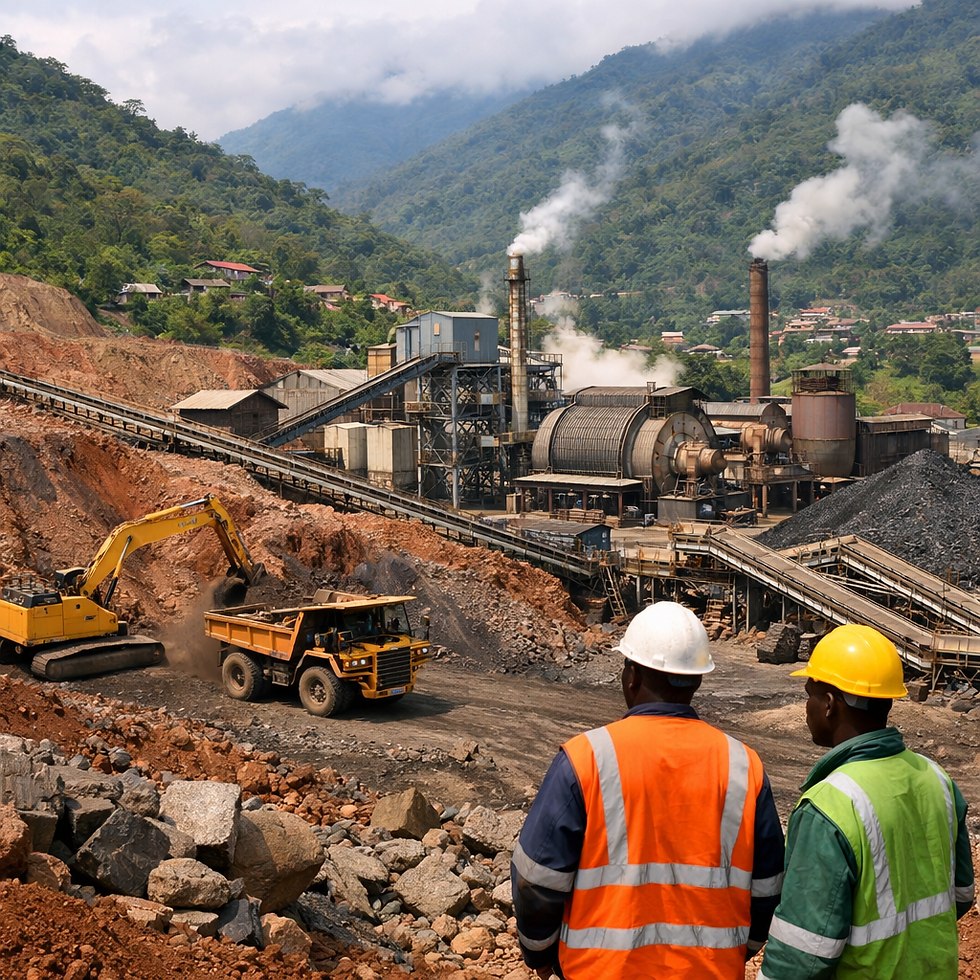
For bid managers, export managers, and project developers worldwide, this development signals a dynamic shift in Uganda’s economic landscape. While the primary redevelopment contracts have already been awarded, the sheer scale and long-term vision of this over USD 200 million brownfield project will undoubtedly generate a cascade of opportunities in the coming years. Understanding the project's current status, its implementing partners, and the broader vision is essential for those looking to engage with Uganda’s burgeoning mining and infrastructure sectors.
Uganda Kilembe Mines Redevelopment 2026: A New Era for Copper and Cobalt
The Kilembe Mines Redevelopment Project is more than a simple revival; it’s a strategic national undertaking championed by the Uganda National Mining Company. This ambitious initiative aims to restore the historical copper and cobalt production capabilities of the Kilembe site, which has been dormant for decades. The project's progression from a Mineral Production Sharing Agreement (MPSA) signed in March 2025 to the current Joint Operating Agreement in September 2026 demonstrates a clear and determined path toward full operationalization.
Under this framework, UNMC, as the state commercial vehicle, holds a 15% stake in the venture, partnering with Sarrai Group Limited and Nile Fibreboard Limited. These private entities emerged as the preferred bidders from a competitive field of 14 companies, underscoring the government's rigorous selection process. The total investment is publicly reported to be over USD 200 million, with some estimates placing it between USD 230 million and USD 250 million. This substantial financial commitment highlights the seriousness with which Uganda is pursuing mineral development and value addition.
The long-term vision extends beyond merely extracting raw materials. The project's technical scope explicitly includes in-country processing and value addition, with plans to produce high-purity copper cathodes and cobalt metal. This focus on downstream activities is a clear signal of Uganda’s intent to move up the value chain, creating more jobs, fostering skills transfer, and attracting further investment in related industries. Keeping track of such large-scale developments is crucial, and platforms like TendersGo.com allow users to monitor project announcements and related procurement activities in Uganda and 220+ other countries.
Project Timeline and Expected Outputs: What to Expect
The Kilembe Mines Redevelopment Project is a multi-year endeavor, with a carefully mapped-out timeline. The initial MPSA was signed on March 3, 2025, paving the way for the official handover of physical assets between May 9 and 10, 2025. The recent signing of the Joint Operating Agreement on September 18, 2026, officially ushers the project into its execution phase, marking a pivotal moment after extensive preparatory work.
While site redevelopment and preparatory work are currently underway, brownfield production is not expected to commence immediately. Official projections indicate that initial production will begin in 2032, with peak production anticipated between 2034 and 2037. This extended timeline provides ample opportunity for businesses to align their strategies with the project's evolving needs, especially as the demand for specialized services, equipment, and consumables will increase significantly closer to the production phase.
The primary outputs will be high-purity copper cathodes and cobalt metal, moving away from simply exporting raw ore. This strategic choice has significant implications for potential suppliers of processing equipment, chemical reagents, and specialized metallurgical services. Furthermore, the project aims to generate substantial employment, facilitate skills and technology transfer, and strengthen local supply chains. Businesses looking to participate in this growth should consider setting up targeted email alerts on TendersGo.com for relevant CPV/NAICS/UNSPSC classification codes, ensuring they receive notifications for upcoming tenders related to mining equipment, processing technology, and related infrastructure in Uganda.
Procurement Landscape and Future Opportunities in Uganda Mining Investment
While the major redevelopment contracts for the Kilembe Mines Redevelopment Project have been awarded to Sarrai Group Limited and Nile Fibreboard Limited, the project's long-term nature means that significant procurement opportunities will still arise. The current phase involves asset handover, site redevelopment, and preparatory work, which will require a steady stream of goods and services. As the project moves towards its 2032 production target, the demand for specialized mining equipment, processing plant components, and operational supplies will intensify.
Companies looking to engage with this project, or the broader Ugandan mining sector, should focus on several areas. These include heavy machinery and earthmoving equipment for site preparation, ventilation systems for underground mining, ore processing technologies, and environmental monitoring services. Furthermore, the emphasis on value addition means opportunities in chemical supply, refining equipment, and quality control systems will emerge. Even though the primary contractors are identified, they will themselves require subcontractors and suppliers, creating a secondary layer of procurement.
For international suppliers, understanding the local procurement culture is vital. While English is widely used in official documents, familiarity with regional practices and establishing local partnerships can be highly beneficial. Organizations can utilize TendersGo.com's advanced search and filtering capabilities to identify past tenders in the Ugandan mining sector, helping them understand typical requirements and potential local partners. Creating an organization profile on TendersGo.com can also enhance visibility to potential collaborators and contracting agencies within Uganda.
Navigating the Ugandan Procurement System: Practical Steps for Bidders
Engaging with procurement opportunities in Uganda, especially for large-scale projects like the Kilembe Mines Redevelopment, requires a clear understanding of the local bidding environment. Although the immediate large-scale contracts for Kilembe are closed, future sub-contracts and related tenders will follow established procedures. Typically, government-linked projects in Uganda follow a framework that emphasizes transparency and competitive bidding, even when private partners are involved.
Prospective bidders should prepare a robust set of documents. These often include proof of legal registration in their home country, financial statements demonstrating capacity, relevant past experience (case studies or project references), and technical specifications for proposed goods or services. For foreign firms, local representation or a partnership with a Ugandan entity is often advantageous, if not explicitly required for certain tenders. This not only aids in navigating local regulations but also demonstrates a commitment to the Ugandan market.
While specific tender portals for Kilembe Mine sub-contracts are not yet public, general government procurement in Uganda is often advertised through official gazettes and specific ministry websites. However, for a more centralized and efficient approach, platforms like TendersGo.com aggregate tenders from various sources, making it easier to find relevant opportunities in Uganda. Using the PDF document viewer feature on TendersGo.com can also help in quickly reviewing tender specifications and requirements, saving valuable time during the bid preparation phase.
Strengthening Local Supply Chains: Opportunities for Uganda Steel and Mining Value Addition Project 2026
The Kilembe Mines Redevelopment Project is not just about mining; it's a significant driver for local content development and strengthening domestic supply chains. The commitment to in-country processing and value addition for copper and cobalt means that a wide array of support industries will be needed. This presents a unique opportunity for both local and international businesses to invest in or supply to Uganda’s nascent industrial base.
Consider the requirements for steel and other fabricated metal products. As the mining and processing infrastructure develops, there will be a growing demand for structural steel, pipes, specialized components, and maintenance parts. This aligns perfectly with the broader vision of a "Uganda steel and mining value addition project 2026" that this redevelopment inherently represents. Companies specializing in steel fabrication, industrial chemicals, heavy-duty electrical components, and specialized engineering services will find increasing opportunities.
Furthermore, the project emphasizes employment creation and skills transfer. This means there will be a need for training providers, technical colleges, and specialized consultants to build the local workforce's capacity. International firms with expertise in mining vocational training or technology transfer can explore partnerships with Ugandan educational institutions or directly with the project consortium. The TendersGo.com B2B global marketplace could serve as a valuable tool for these types of partnerships, allowing organizations to connect and explore collaborative ventures.
Beyond Kilembe: The Broader Impact on Uganda's Mineral Sector
The Kilembe Mines Redevelopment Project, while significant in its own right, also serves as a bellwether for Uganda's broader aspirations in the mineral sector. The successful execution of this project is likely to attract further foreign direct investment into other mineral exploration and development initiatives across the country. Uganda boasts a diverse mineral endowment, and the Kilembe project's success could unlock potential in other areas such as gold, iron ore, and rare earth elements.
The government's approach, epitomized by UNMC's involvement and the emphasis on value addition, sets a precedent for future mining endeavors. This indicates a strategic shift towards ensuring that mineral wealth contributes more substantially to the national economy, rather than merely being exported in raw form. Businesses that can offer expertise in sustainable mining practices, environmental management, and advanced processing technologies will be particularly well-positioned for future opportunities in Uganda.
As Uganda continues to develop its mineral resources, the need for robust procurement intelligence becomes even more critical. Companies can leverage the power of TendersGo.com to stay ahead, setting up saved searches for specific keywords like "Uganda mining," "copper processing," or "cobalt development" to ensure they are immediately alerted to new tenders. With its coverage of 145 languages and AI-powered summaries, TendersGo.com provides a comprehensive tool for monitoring the evolving procurement landscape in Uganda and beyond, ensuring no significant opportunity is missed.





