
Mali ARISE Project Dialysis Kits Procurement 2026

The global procurement landscape is a dynamic one, often presenting both opportunities and challenges. For bid managers, export managers, and government officials worldwide, staying ahead of these developments is not just beneficial, it's essential. This is particularly true when navigating complex sectors like healthcare infrastructure and equipment, especially in regions like Mali. Recent inquiries have focused on a potential "Mali ARISE Project Dialysis Kits Procurement 2026," a topic that, upon closer inspection, reveals a more nuanced reality than initially perceived.
My investigations, drawing on the latest available information as of early 2026, indicate that while there's a clear and ongoing need for healthcare supplies in Mali, direct evidence of a specific "ARISE Project" centered on dialysis kits for 2026 remains elusive. What we do find, however, are several interconnected procurement initiatives that could offer pathways for suppliers of medical equipment, even if the exact project name or scope isn't what some might expect. Understanding these underlying opportunities requires a careful look at current World Bank initiatives, global long-term agreements, and the broader procurement environment in Mali.
Untangling the "Mali ARISE" Connection: What We Know and Don't Know
The term "Mali ARISE Project Dialysis Kits Procurement 2026" has circulated, prompting many to search for specific tender announcements. However, official records and procurement plans, including those from the World Bank, do not specifically list a project under this exact name with a focus on dialysis kits for 2026 in Mali. This isn't to say there are no healthcare procurement opportunities; rather, it suggests that the project name or its specific focus might be a misnomer, or perhaps an anticipated initiative that has yet to materialize under that label.
Instead, our research points to the World Bank-funded KENEYA YIRIWALI Project (P503776) as a more concrete, active initiative in Mali that includes a significant healthcare component. The procurement plan for KENEYA YIRIWALI was disclosed on January 29, 2026, and covers general health and infrastructure development within Mali, a country in the Western and Central Africa region. While this project is broad and aims to strengthen various aspects of Mali's health system, it doesn't explicitly detail specific tenders for dialysis kits. This scenario is not uncommon; large-scale development projects often have umbrella procurement plans, with specific sub-component tenders announced later as the project progresses. For those interested in tracking the various tenders emerging from such projects, services like TendersGo can be invaluable, allowing users to set up unlimited email alerts for specific keywords or project IDs.
World Bank's KENEYA YIRIWALI Project (P503776): A Closer Look at Potential Health Opportunities
The KENEYA YIRIWALI Project, with its recently disclosed procurement plan, represents a significant investment in Mali's future. While it doesn't explicitly mention dialysis kits, its general health and infrastructure mandate means there will undoubtedly be procurement for medical supplies, equipment, and related services. Companies specializing in various aspects of healthcare, from pharmaceuticals to medical devices, should be closely monitoring this project. The World Bank typically issues tenders through its established procurement guidelines, which prioritize transparency and competitiveness. Bidders will need to demonstrate strong financial standing, relevant experience, and the capacity to deliver in the Malian context.
Potential procurement under KENEYA YIRIWALI could include everything from basic medical consumables to more specialized equipment for clinics and hospitals. While dialysis equipment isn't specified, the overall strengthening of the health system might create a demand for such items if existing facilities are upgraded or new ones established. Understanding the project's broader objectives and the specific needs of Mali's healthcare system is crucial for identifying where a supplier's offerings might align. Keeping an eye on the World Bank's official procurement notices and utilizing advanced search and filtering tools on platforms like TendersGo can help procurement professionals quickly identify relevant tenders as they are published.
Global Procurement Avenues: UNOPS Long Term Agreements (LTAs) for Dialysis Items
Given the absence of a direct "Mali ARISE Dialysis Kits" tender, it's worth exploring alternative, broader procurement mechanisms that could indirectly serve Mali's needs. One such avenue is the UNOPS Long Term Agreement (LTA) for Medical Supplies, specifically UNGM Notice 274000. This global invitation to bid is designed to establish non-exclusive LTAs for a wide range of medical items, including various dialysis-related products.
The UNOPS LTA covers items such as peritoneal dialysis kits (CPV code 42161510), hemodialysis administration kits (CPV code 42161601), as well as solutions, catheters, and entire dialysis units. These LTAs are structured to allow UN agencies, including those operating in Mali, to procure items quickly and efficiently from pre-qualified suppliers when needs arise. While there's no Mali-specific allocation or a 2026 deadline tied directly to these LTAs for in-country delivery, becoming a pre-qualified supplier under such an agreement opens doors to future procurement opportunities that could very well benefit Mali. Suppliers eyeing the Malian market for dialysis equipment should consider participating in these global LTAs, as they can be a strategic entry point for humanitarian and development projects.
Navigating UNOPS LTAs: What Bidders Need to Know
Participating in a UNOPS LTA requires a thorough understanding of their procurement processes and the specific requirements for each category of items. Suppliers must demonstrate not only competitive pricing but also adherence to international quality standards, robust supply chain capabilities, and ethical business practices. The LTA process typically involves a detailed technical and financial evaluation, and successful bidders are placed on a roster of approved suppliers. When a specific country office, like UNOPS Mali, identifies a need for dialysis kits, they can then procure directly from these pre-qualified suppliers.
For companies, this means maintaining up-to-date organization profiles and company information pages, such as those that can be created on TendersGo , to showcase their capabilities and certifications. While the LTA itself doesn't guarantee orders, it significantly streamlines the procurement process for UN entities, making it a highly attractive route for suppliers looking to engage with international aid and development projects. Understanding the CPV codes and other classification systems, like NAICS or UNSPSC, is also crucial for identifying relevant LTA categories and ensuring your offerings align with the procurement needs.
Mali's Broader Healthcare Procurement Landscape in 2026
Beyond the specific inquiries about ARISE and the World Bank's KENEYA YIRIWALI project, Mali's general healthcare sector is consistently seeking supplies and equipment. As of early 2026, other active procurements demonstrate this ongoing need, albeit not specifically for dialysis kits. For instance, the International Organization for Migration (IOM) has active tenders for various kits (four lots) with a deadline of December 5, 2026, though these focus more on education and governance-related items. Similarly, the Food and Agriculture Organization (FAO) has tenders for hygienic equipment, with a deadline of March 30, 2026.
These examples highlight the diverse range of procurement activities in Mali. While not directly related to dialysis, they underscore the continuous demand for essential supplies and services across different humanitarian and development sectors. It also points to the fact that procurement in Mali is often driven by a multitude of international organizations and NGOs, each with their own funding sources and specific project mandates. This fragmented but active market requires a broad search strategy from companies interested in participating.
Identifying Opportunities Through Comprehensive Search Strategies
For companies to effectively participate in Mali's procurement landscape, a comprehensive search strategy is paramount. This involves not only monitoring major international funding bodies like the World Bank and UN agencies but also tracking national government tenders and those issued by non-governmental organizations operating in the country. The official Malian government procurement portals, while sometimes challenging to navigate due to language barriers or inconsistent updates, are an important source. However, platforms like TendersGo consolidate information from thousands of sources globally, including those in Mali, offering a more streamlined approach.
Using TendersGo's world's largest tender search engine , which covers over 220 countries and 145 languages, allows bid managers to search for tenders using keywords in both English and local languages, such as French, which is widely used in Mali's official communications. The platform's AI-powered summaries can quickly distill the essence of tender documents, even those in foreign languages, saving valuable time. Furthermore, the ability to view PDF documents directly within the platform and utilize CPV/NAICS/UNSPSC classification codes helps ensure that no relevant opportunity is missed, regardless of the precise wording used in the tender notice.
Practicalities for Bidders: Documentation and Qualification
Participating in procurement tenders in Mali, especially those funded by international organizations, requires meticulous preparation. Bidders must be ready to provide a comprehensive set of documents, which typically include:
Legal Registration: Proof of company registration in the country of origin and, if applicable, in Mali.
Financial Statements: Audited financial reports for the past several years to demonstrate financial stability.
Technical Specifications: Detailed descriptions and certifications for the products or services offered, ensuring they meet international standards (e.g., ISO, CE for medical devices).
Experience: References and past performance records for similar projects, particularly in developing countries or challenging environments.
Team Qualifications: Resumes and qualifications of key personnel involved in the project.
Local Presence/Partnership: While not always mandatory, having a local partner or a registered office in Mali can significantly enhance a bid, demonstrating commitment and understanding of the local context.
Compliance: Adherence to ethical guidelines, anti-corruption policies, and environmental and social safeguards.
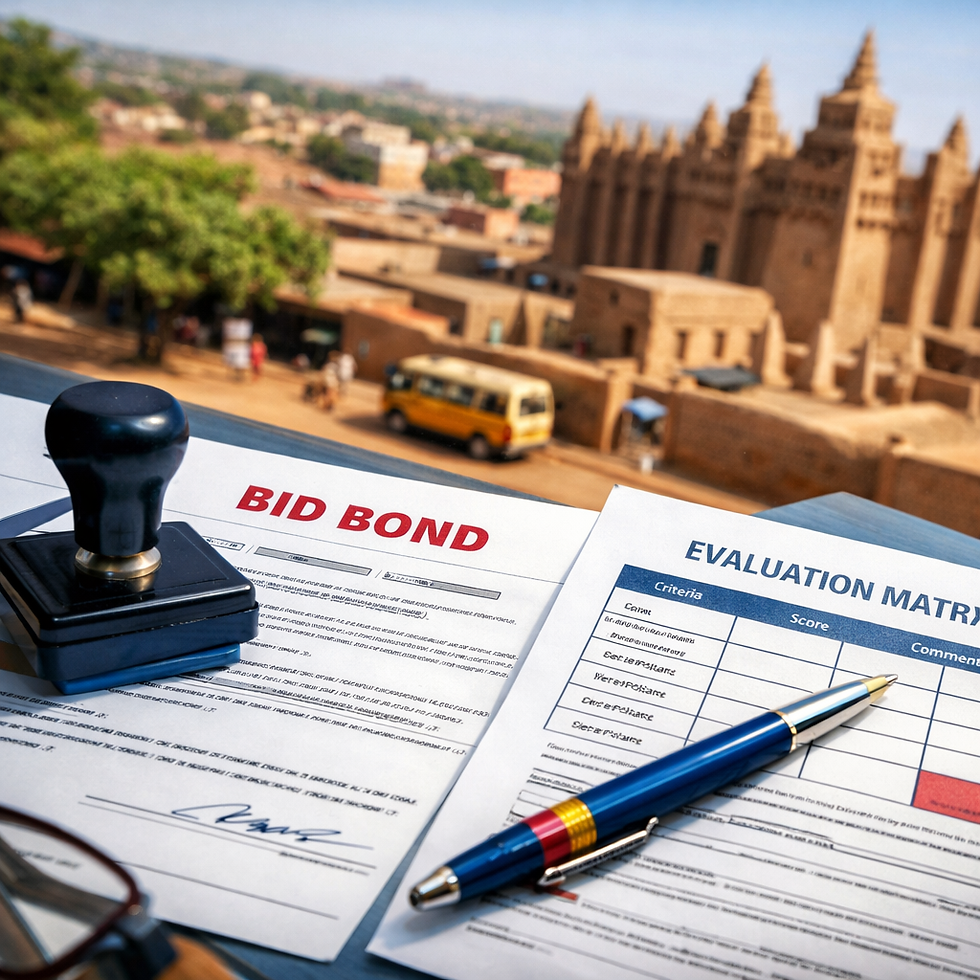
The specific requirements will vary depending on the funding agency and the nature of the tender. For World Bank-funded projects like KENEYA YIRIWALI, compliance with their specific procurement guidelines is critical. For UNOPS LTAs, strict adherence to their terms and conditions for medical supplies is essential. It's also worth noting that some tenders may require bid bonds or performance guarantees, which are financial instruments that assure the procuring entity of the bidder's commitment and capability.
Building a Strong Bid: Beyond the Documents
Beyond simply submitting the required documents, a strong bid for procurement in Mali requires a deep understanding of the local context. This includes an awareness of logistics challenges, customs procedures, and the specific needs of the Malian healthcare system. For instance, cold chain requirements for certain medical supplies can be particularly demanding in a country with infrastructure limitations. Proposing solutions that address these practical challenges, rather than just offering products, can differentiate a bidder.
Furthermore, demonstrating a commitment to local capacity building or knowledge transfer, where appropriate, can be viewed favorably. This might involve training local staff on the use and maintenance of equipment or collaborating with local businesses. The TendersGo B2B global marketplace can facilitate connections between international suppliers and local partners, fostering collaborations that strengthen bids and project outcomes.
The Malian Procurement Culture: Language, Local Nuances, and Deadlines
Mali's procurement culture, like many Francophone African nations, is influenced by both its colonial past and its current administrative structures. French is the official language for most formal procurement communications, although local languages may be used in informal settings. All official tender documents, clarifications, and contractual agreements will almost certainly be in French. Therefore, having in-house French language capabilities or access to reliable translation services is not merely an advantage; it's a necessity for any serious bidder.
Deadlines in Malian procurement, as elsewhere, are strict. Late submissions are almost universally rejected, regardless of the reason. This makes timely preparation and submission critical. Given potential internet connectivity issues or other logistical hurdles, it's always advisable to plan for submission well in advance of the stated deadline. Many international tenders now accept electronic submissions, but understanding the specific platform and any associated technical requirements is crucial. For example, the TendersGo AI Assistance feature can help users quickly understand the key details and requirements of tenders from Mali, including submission methods and critical dates, even if the original documents are in French.
Local nuances can also influence procurement outcomes. Building relationships with local stakeholders, understanding the prevailing business practices, and demonstrating cultural sensitivity are all factors that can contribute to success. While the formal procurement process is designed to be objective, a deeper understanding of the local context can help bidders tailor their proposals more effectively and anticipate potential challenges.
While a specific "Mali ARISE Project Dialysis Kits Procurement 2026" may not be an identifiable tender, the broader landscape of healthcare procurement in Mali, driven by initiatives like the World Bank's KENEYA YIRIWALI Project and global UNOPS LTAs, presents significant opportunities. For companies specializing in medical supplies, particularly dialysis equipment, the path to engagement involves diligent monitoring of multiple procurement channels, meticulous preparation of bids, and a keen understanding of the Malian context and international procurement standards. The ability to identify, track, and respond to these opportunities, often across different languages and platforms, will define success in this dynamic market.





