
Grenada Education Enhancement Project Phase II

Grenada's commitment to modernizing its educational infrastructure is taking a significant stride forward with the ongoing Grenada Education Enhancement Project Phase II. This ambitious undertaking, backed by substantial financing from the Caribbean Development Bank (CDB) and the Global Partnership for Education (GPE), is actively transforming school facilities across the island. Bid managers, export managers, and project developers looking for opportunities in the Caribbean need to pay close attention to this project's continued procurement and construction activities, which are slated to run well into 2026.
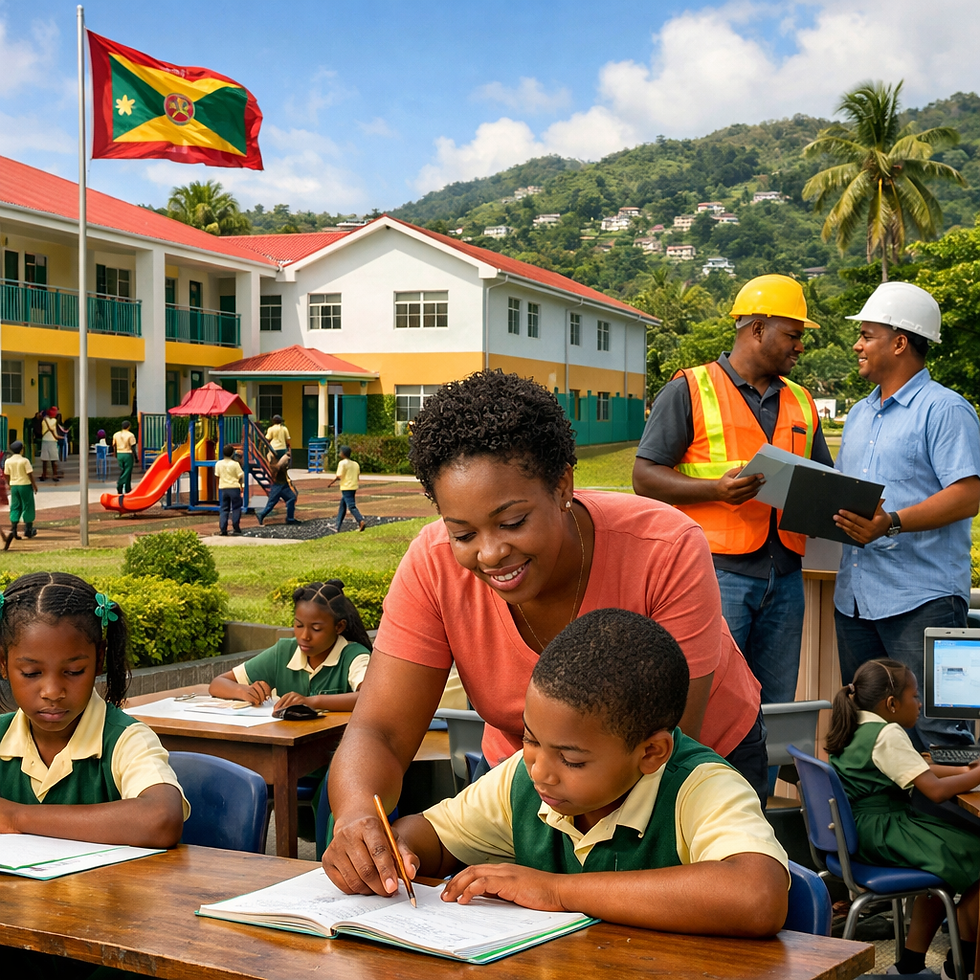
The project, officially designated as the Grenada Education Enhancement Project - Phase II, is spearheaded by the Ministry of Education, Human Resource Development, Religious Affairs and Information (MOE), though procurement documents often simplify this to just the Ministry of Education. This initiative is not merely about building new structures; it's about fostering an improved learning environment that is both resilient and environmentally sustainable, directly impacting the quality, relevance, and equity of basic education for Grenadian students. With a total estimated budget of US$15.5 million, including a US$15.0 million CDB loan and a US$0.5 million grant, the scale of this investment in public services education is substantial.
Project Scope and Ambitious Goals for Grenadian Schools
The Grenada Education Enhancement Project Phase II is a comprehensive school infrastructure modernization program. It aims to address critical needs in the education sector by constructing, rehabilitating, and expanding various school facilities across Grenada. The technical scope is impressive, with plans for new multi-story buildings that will house modern classrooms, multi-science facilities, and administrative accommodations.
Consider, for instance, a major package that includes a new three-story building, designed to feature 11 classrooms along with dedicated multi-science facilities and administrative spaces. Another reported school package under this phase involves four three-story buildings, approximately 11 classrooms, and even a basketball court – a clear indication of the project's holistic approach to student development. Schools like St. Andrew’s Anglican Primary, Grenada Christian Academy, St. David’s Catholic Secondary, and J.W. Fletcher Memorial Secondary are all slated for significant upgrades or new construction under this phase. The focus is on creating ultra-modern, resilient, and environmentally sustainable schools that will serve generations of Grenadian students.
Funding and Financial Commitments Driving the Project
Understanding the financial backbone of this project is crucial for any potential bidder. The Caribbean Development Bank's appraisal approved EUR 6,185,000 from Ordinary Capital Resources. However, Grenada's own 2022 budget statement provided a broader picture, estimating the total project cost at US$15.5 million, with the lion's share coming from a US$15.0 million CDB loan and supplemented by a US$0.5 million grant. These figures highlight the significant international and national commitment to this educational initiative.
As the project progresses, we've seen specific construction packages with substantial values. For example, a 2025 report detailed a contract for the new St. Andrew’s Anglican Primary School amounting to EC$26,592,237.90. Another significant contract, signed in November 2023 for school construction under Phase II, was reported at $27.4 million. These figures not only underscore the scale of individual works but also signal a consistent flow of investment into Grenada's public services education sector. Procurement officers and project developers tracking these investments can find detailed financial breakdowns and procurement notices on platforms like TendersGo , which aggregates such opportunities globally.
Timeline and Ongoing Procurement Activities in 2026
While the initial disbursement period for the CDB-financed component was set from March 1, 2021, to December 31, 2024, the project remains very much active and ongoing in 2026. This extended activity is typical for large-scale infrastructure projects, where initial timelines often adjust to accommodate various implementation phases. Grenada's 2022 estimates document anticipated construction to begin in the first quarter of 2022. Indeed, we've seen major contracts progress, with one notable school contract reported to commence on April 8, 2024, with an 18-month duration, implying completion around late 2025 for that specific package.
Even in 2026, the project is still referenced in official CDB country and project listings, and procurement planning updates continue to be published. This indicates that while some packages might be nearing completion, new procurement opportunities are still emerging or revised plans for existing ones are being issued. The project launch workshop for the CDB-financed component has been completed, and procurement planning has been revised through June 2026. This ongoing activity means that firms interested in participating should regularly check for new tender announcements and updates on procurement plans. Advanced search and filtering on platforms like TendersGo can help pinpoint these specific opportunities within Grenada's education sector.
Key Implementing Agencies and Contractors
The primary implementing agency for the Grenada Education Enhancement Project - Phase II is the Ministry of Education, Human Resource Development, Religious Affairs and Information (MOE). As the borrower, the Government of Grenada works closely with the Caribbean Development Bank to ensure the project's successful execution. For firms looking to engage, understanding the MOE's procurement processes and requirements is paramount.
Several contractors have already been awarded significant packages under this project. Creative Design & Building Construction Co. Ltd. was reported as the contractor for the St. Andrew’s Anglican Primary School package. Furthermore, a joint venture between Kee-Chanona and Sonrise Construction JV Inc. secured a major phase-two school package, with a contract signing reported in November 2023. These examples illustrate the types of firms currently engaged and provide insight into the competitive landscape. Companies interested in future tenders should consider forming similar joint ventures, especially if they are international firms looking to partner with local expertise. Information on these organizations and their past project involvement can often be found through organization profiles and company information pages on global procurement platforms.
Navigating Procurement Opportunities: What Bidders Need to Know
For bid managers and export managers eyeing opportunities within the Grenada Education Enhancement Project Phase II, understanding the procurement landscape is critical. Since this project is largely CDB-financed, it adheres to specific procurement guidelines that are generally consistent with international best practices. These typically involve competitive bidding processes, whether through International Competitive Bidding (ICB) or National Competitive Bidding (NCB), depending on the package size and nature.
Potential bidders should prepare to meet stringent qualification requirements. These often include demonstrating financial capacity, relevant experience in similar infrastructure projects (especially school construction or rehabilitation), and having the necessary technical expertise and personnel. Documentation typically required includes company registration, financial statements, project references, and detailed technical proposals. Given the project's emphasis on resilient and environmentally sustainable construction, bidders with experience in green building practices or climate-resilient design may have a distinct advantage. Regularly monitoring procurement notices and revised procurement plans, which are available through June 2026, is essential. Setting up unlimited email alerts on TendersGo for Grenada, and specifically for the education or construction sectors, can ensure no opportunity is missed.
The Broader Impact and Future Outlook
The Grenada Education Enhancement Project Phase II is more than just a series of construction contracts; it represents a significant investment in human capital and the future of Grenada. By improving the quality, relevance, and equity of basic education, the project is laying the groundwork for enhanced student learning outcomes and, ultimately, a more skilled and educated workforce. The emphasis on resilient and environmentally sustainable school construction also aligns with broader regional efforts to adapt to climate change and build more durable infrastructure.
Beyond the immediate construction phase, the project's institutional strengthening component, partly funded by the Global Partnership for Education, suggests ongoing opportunities for consulting services, training programs, and educational technology providers. This multi-faceted approach means that the project's influence will extend far beyond the completion of physical buildings. Businesses involved in educational content development, teacher training, or school management systems should also keep an eye on related tenders. The sustained activity and continuous updates through 2026 confirm that Grenada's commitment to educational advancement remains a top priority, offering a steady stream of opportunities for those prepared to contribute to this vital sector.





