
Fiji Islands Buca Village Hydro Power Project: US$3.44M Upgrade

The Fiji Islands are charting a course towards a greener, more resilient future, and a significant milestone on this journey is the Buca Village Hydro Project. This isn't just another infrastructure upgrade; it's a vital US$3.44 million investment aimed at transforming energy access for hundreds of residents in a remote part of Vanua Levu. The project, specifically targeting the Buca Village mini hydro upgrade, promises to boost the existing mini-hydro facility from a modest 30kW to a robust 100kW capacity, marking a crucial step in Fiji's renewable energy project for 2026 and beyond.
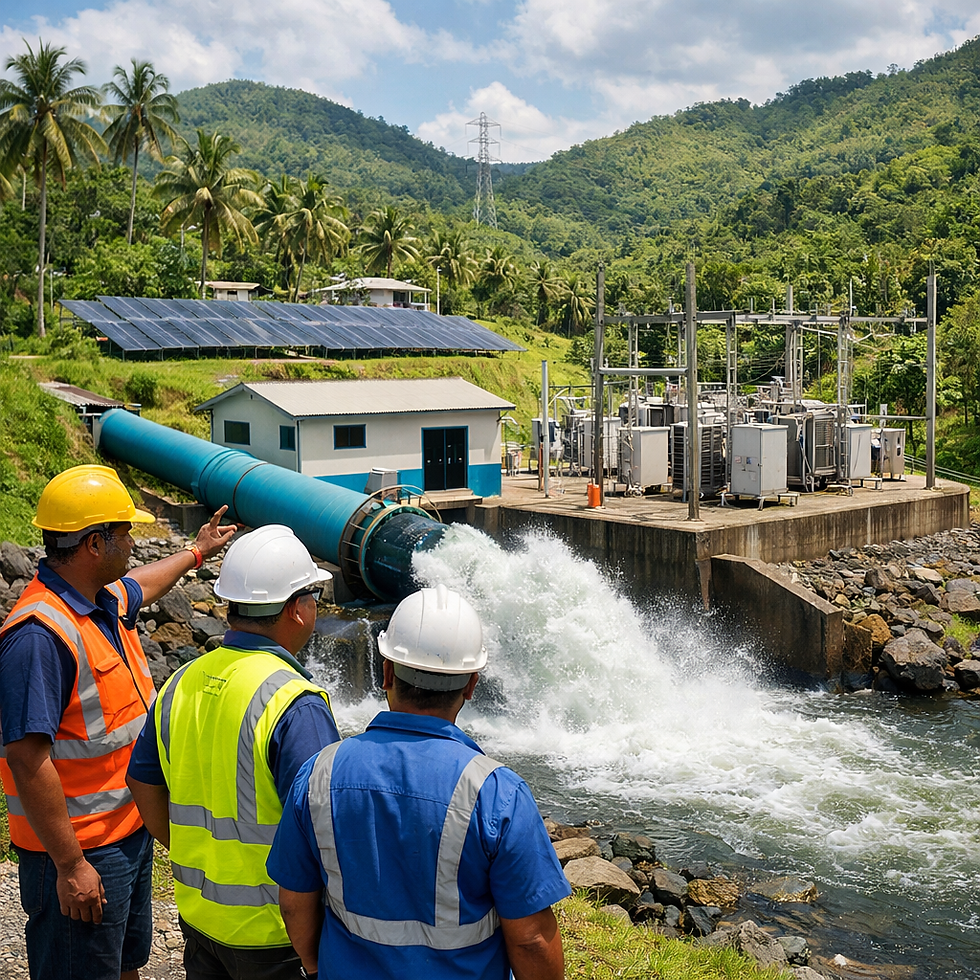
For those of us who track global infrastructure development, the Buca project stands out not only for its clear environmental benefits but also for its strategic importance in rural development. The Ministry of Public Works Fiji energy initiative underpins this effort, demonstrating a clear commitment to sustainable power solutions. This infusion of US 3.44 million hydro investment Fiji is fully grant-funded, a factor that often streamlines project execution and minimizes financial risk, making it an attractive prospect for international bidders looking to contribute expertise and technology.
Project Overview: Powering Buca Village for a Brighter Future
At its core, the Buca Village Hydro Project addresses a fundamental need: reliable, affordable electricity. Buca Village, nestled in Cakaudrove Province on Vanua Levu, has long grappled with inconsistent power, relying on a mini-hydro system that, while innovative in its time, proved insufficient and eventually malfunctioned. This upgrade isn't merely about restoring power; it's about quadrupling the capacity and ensuring long-term sustainability for approximately 540 residents across 90 households, with some reports suggesting up to 120 households or 720 villagers will benefit directly.
The Fiji Ministry of Public Works, under the leadership of Minister Ro Filipe Tuisawau, is spearheading this critical endeavor. The goal is clear: replace the environmentally costly and often unreliable diesel generation with a stable, low-cost renewable hydropower source. This will not only improve energy reliability but also significantly impact community livelihoods and stimulate local economic activity. It's a testament to Fiji's broader commitment to rural electrification and renewable energy, positioning Buca as a flagship project for future similar initiatives across the islands.
Funding and Strategic Partnerships Driving the Upgrade
The financial backbone of the Buca Village Hydro Project is robust and strategically structured. The entire US$3.44 million budget is fully financed through a grant administered by the Asian Development Bank (ADB), specifically via the Japan Fund for Prosperous and Resilient Asia and the Pacific (JFPR). This 100% grant-funded model is particularly noteworthy; it means no loans, no public-private partnerships (PPPs), and no private investment are directly tied to the primary project funding, simplifying the financial landscape for implementers and contractors.
While the ADB grant covers the direct project costs, the Government of Fiji is providing invaluable in-kind support. This includes crucial pre-project infrastructure development, such as the construction of an access road from the main road to the powerhouse. This kind of local contribution, funded via the Northern Divisional Engineer, highlights a collaborative approach, ensuring that all necessary groundwork is laid for the project's success. It's a model that many international development projects aspire to, blending external financial support with strong local commitment.
Upcoming Procurement Opportunities and Tender Status
For bid managers and project developers, understanding the procurement landscape for the Buca Village Hydro Project is paramount. As of May 2026, the project is firmly in its pre-construction phase, with significant procurement activities underway and others on the immediate horizon. This presents a timely opportunity for specialized firms and consultants to engage with a key renewable energy initiative in the Pacific.
The Project Management Unit (PMU) under the Ministry of Public Works is central to this effort. Interviews for key PMU roles, including a Project Manager, Environmental Specialist, Social Safeguards and Gender Specialist, and an Operations & Maintenance Capacity Development Specialist, have already been completed. Final appointments for these critical positions are expected by June 2026. These roles are essential for overseeing the project's technical, environmental, and social aspects, ensuring its smooth execution and long-term viability. TendersGo has been tracking these active procurement notices, offering a reliable source for updates.
Contractor Engagement and Technical Evaluation
The most substantial procurement opportunities for external contractors relate to the core civil works and the technical upgrade of the mini-hydro facility. The Fiji Ministry of Public Works/Energy's technical team is currently undertaking the technical evaluation for these contracts. We anticipate that contract awards will be announced by August 2026, subject to the completion of due process and final approvals. This timeline means firms specializing in hydro power engineering, civil construction, and renewable energy infrastructure should be actively preparing their proposals.
Bidders should understand that the scope involves expanding the mini-hydro from 30kW to 100kW. This isn't just a simple scaling up; it requires expertise in turbine technology, generator installation, power transmission infrastructure, and potentially system integration with existing local grids. While specific contractor names haven't been released, the competitive landscape will likely favor firms with a proven track record in similar remote or island-based renewable energy projects. Keeping an eye on official announcements and utilizing platforms like TendersGo’s advanced search and filtering can provide a competitive edge.
Navigating Fiji's Procurement Landscape: What You Need to Know
Participating in procurement tenders in Fiji, particularly for a project of this significance, requires a clear understanding of local regulations and expectations. While specific tender documents will outline precise requirements, some general guidelines are helpful for international and local bidders alike. The Fiji Ministry of Public Works typically follows transparent, competitive bidding processes, often aligned with international standards given the involvement of bodies like the ADB.
Key documentation will likely include detailed company profiles, evidence of financial stability, extensive technical qualifications, and a strong portfolio of relevant past projects. For infrastructure projects, demonstrating experience in remote or challenging geographical conditions is often a significant advantage. Furthermore, a commitment to local employment and capacity building, including training local personnel for operations and maintenance, is frequently a highly regarded aspect of bids.
Essential Bid Preparation and Local Compliance
Prospective bidders should prepare comprehensive proposals that not only meet technical specifications but also address social and environmental safeguards. The appointment of dedicated specialists for social safeguards and gender, and environmental concerns within the PMU, signals the importance placed on these aspects. Bids that articulate a clear plan for minimizing environmental impact and maximizing positive social outcomes, including community engagement strategies, will likely be viewed favorably.
Language requirements in Fiji procurement are generally in English, although understanding certain Fijian cultural nuances can be beneficial. All official communications, tender documents, and contracts will be in English. It's advisable for international firms to consider local partnerships or engage with local consultants who are well-versed in Fiji's business environment and regulatory framework. Utilizing resources that offer insights into Fijian procurement processes can greatly assist in preparing a compliant and competitive bid.
Project Impact and Future Outlook for Renewable Energy
The Buca Village Hydro Project is more than just an energy upgrade; it’s a catalyst for broader development in the region. By replacing unreliable diesel generators, the project will significantly reduce carbon emissions, aligning Fiji with global climate action goals. More immediately, it promises a stable power supply, which is fundamental for improving educational opportunities, health services, and small business development within Buca Village.
This project is also intended to serve as a model for similar initiatives across the Fiji Islands. The success of the Buca mini-hydro upgrade, particularly its ability to deliver reliable, low-cost renewable energy and foster local economic activity, will provide invaluable lessons for future rural electrification projects. The focus on operations and maintenance capacity building, through the dedicated PMU specialist, underscores a long-term vision for sustainable energy infrastructure.
Broader Context: Fiji's Renewable Energy Ambitions
Fiji has ambitious renewable energy targets, and projects like Buca are crucial stepping stones. While the Buca Bay Hydro project of a decade ago, with its 1MW potential, was a larger endeavor, the Buca Village upgrade highlights the importance of decentralized, community-focused solutions. These smaller-scale projects are often more adaptable to remote island communities and can be commissioned more rapidly, delivering immediate benefits. The emphasis on upgrading existing infrastructure rather than starting from scratch also speaks to a pragmatic approach to resource utilization.
As Fiji continues its renewable energy journey, we can expect to see more opportunities in solar, wind, and other hydro projects. For companies looking to expand their presence in the Pacific, Fiji offers a growing market driven by strong government commitment and international support. Keeping up-to-date on these developments, perhaps through organization profiles on platforms like TendersGo, can be highly advantageous.
Timeline and Key Milestones for the Buca Village Hydro Project
Understanding the project timeline is essential for anyone interested in participating or tracking its progress. As of May 2026, the Buca Village Hydro Project is moving forward purposefully, with several critical milestones either recently achieved or fast approaching. This structured approach helps ensure accountability and provides clarity for all stakeholders.
The pre-development phase is well underway, with preparatory works advancing steadily. A major recent step has been the completion of interviews for the key PMU roles, with final appointments expected by June 2026. This means the core project management team will soon be fully in place, ready to guide the project through its subsequent stages.
Anticipated Construction and Commissioning
Looking ahead, the technical evaluation and contract awards for the main construction and upgrade works are anticipated by August 2026. This is a crucial window for bidders who have been following the project closely. Once these contracts are awarded and the necessary access road construction is completed by the Northern Divisional Engineer, we can expect construction to commence in Q3 2026 onwards.
While an explicit completion or commissioning date isn't yet fixed in current reports, the rapid progression of the pre-construction phase suggests a streamlined execution. The memory of the previous system's malfunction in February 2022, primarily due to battery failure, underscores the urgency and importance of this upgrade. The project aims not just for restoration but for a significant enhancement in capacity and reliability, setting a new standard for rural energy provision in Fiji. For continuous updates and to discover related tenders, consider setting up unlimited email alerts on TendersGo for keywords like "Fiji hydro" or "renewable energy Fiji."
Environmental and Social Safeguards: A Project Priority
In line with modern development practices and ADB guidelines, the Buca Village Hydro Project places significant emphasis on environmental and social safeguards. This isn't an afterthought but an integral part of the project's design and implementation. The appointment of an Environmental Specialist and a Social Safeguards and Gender Specialist to the Project Management Unit by June 2026 highlights this commitment.
While detailed Environmental Impact Assessment (EIA) reports haven't been widely publicized, the project's core objective of replacing diesel generation with hydropower inherently brings substantial environmental benefits. It will reduce reliance on fossil fuels, decrease greenhouse gas emissions, and contribute to cleaner air and water in the local environment. Any potential localized impacts during construction will be carefully managed by the appointed specialists, ensuring adherence to best practices.
Community Engagement and Positive Impacts
From a social perspective, the project is designed to deliver overwhelmingly positive impacts. Reliable electricity is a fundamental driver of social development. It enables better lighting for schools, refrigeration for food and medicine, and opportunities for small-scale enterprises. The dedicated Social Safeguards and Gender Specialist will ensure that the project benefits all segments of the community equitably, and that any concerns raised by local residents are addressed effectively. This includes ensuring fair labor practices during construction and fostering local participation in the project's long-term success.
The Buca Village Hydro Project exemplifies how infrastructure investment can be a powerful tool for sustainable rural development. The reduction in diesel consumption will lead to quieter environments and cleaner air, directly improving the quality of life for villagers. By serving as a model for Fiji's renewable energy initiatives, this project is not just upgrading a power station; it's investing in the well-being and future prosperity of an entire community.





