Ethiopia Air Force Expansion Project 2026-2030

Ethiopia is charting an ambitious course for its defense capabilities, with a significant modernization and expansion plan underway for its Air Force. Announced in January 2026 by Prime Minister Abiy Ahmed, this roadmap aims to transform the Ethiopian Air Force (EAF) into a formidable fifth-generation power by 2030, while simultaneously doubling its combat aircraft capacity. This isn't just about acquiring new hardware; it's a strategic overhaul touching on technology, training, and operational readiness, presenting substantial Ethiopia defense procurement and security investment news for international suppliers and partners.
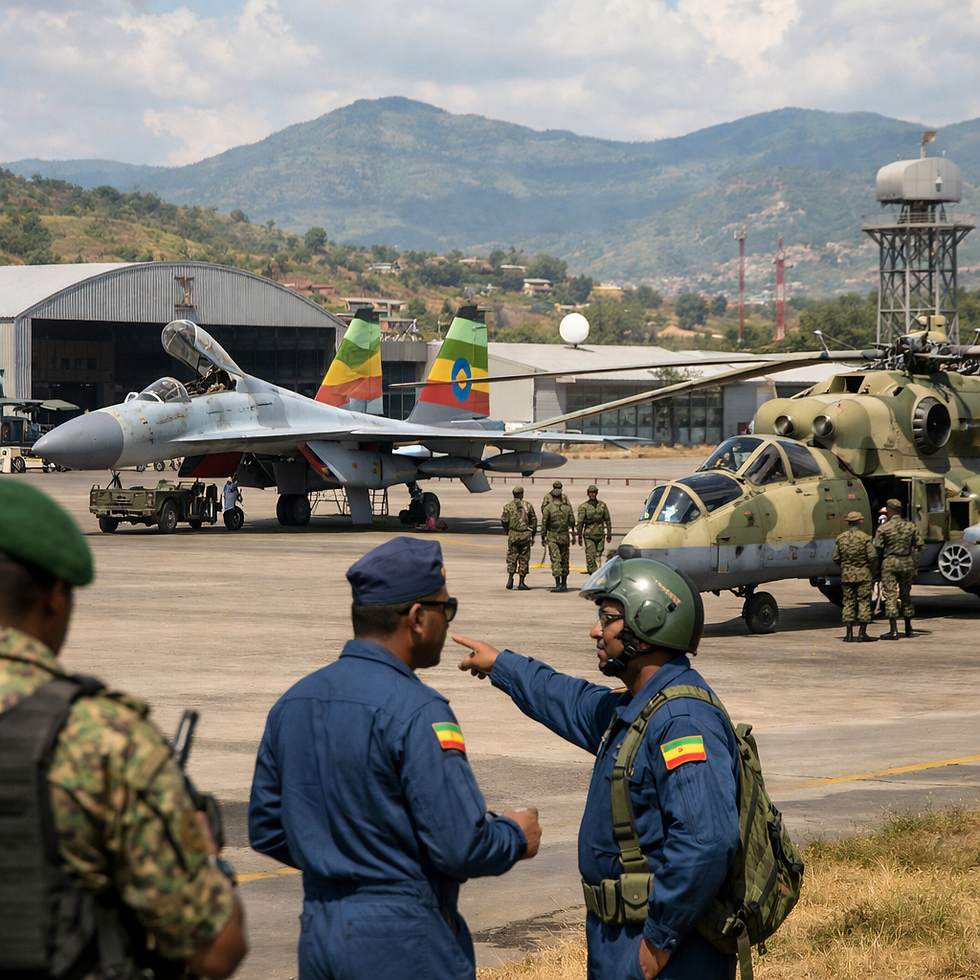
The announcement itself underscored a commitment backed by what the government described as a "clear plan, budget, and source." While precise financial figures have yet to be publicly itemized, the sheer scale of the stated objectives suggests a multi-billion-dollar investment over the coming years. For companies specializing in aerospace, defense technology, and related services, this signals a crucial period to monitor developments and understand the evolving needs of one of Africa's rapidly modernizing military forces.
Understanding the Ethiopian Air Force Expansion Project 2026-2030
The core of this initiative, often referred to as the Ethiopian Air Force modernization or expansion plan, is a strategic shift designed to elevate the EAF's operational capabilities dramatically. The move towards fifth-generation combat capability is particularly noteworthy. This isn't merely an upgrade; it implies a leap into advanced stealth technology, highly integrated avionics, superior situational awareness, and networked warfare capabilities. Such a transition requires not only state-of-the-art aircraft but also sophisticated ground support systems, advanced training simulators, and robust maintenance infrastructure.
Doubling the combat aircraft fleet is another defining characteristic of this plan. This will necessitate significant procurement of new fighter jets, potentially alongside upgrades and lifecycle extensions for existing platforms. The scope extends beyond just fighters, however. A modern air force relies on a complex ecosystem of intelligence, surveillance, and reconnaissance (ISR) assets, transport aircraft, and specialized mission platforms. The breadth of this expansion suggests opportunities across the entire spectrum of aerospace and defense industries, from airframe manufacturers to component suppliers and training providers.
Implementing Agencies and Partner Identification
The primary implementing military institution for this vast undertaking is the Ethiopian Air Force itself, operating under the umbrella of the Ethiopian National Defence Force (ENDF). This direct involvement means that procurement decisions and strategic direction will largely emanate from within the military command structure. While no separate civilian contracting agency has been identified, public reporting does allude to "collaboration with government partners," indicating a coordinated national effort.
Prime Minister Abiy Ahmed's statements in January 2026 confirmed that the government had already "identified partners" and was actively working with major international manufacturers. This suggests that some preliminary discussions and strategic alliances may already be in place. For businesses looking to engage, understanding these existing relationships and identifying potential consortium opportunities will be key. The Ethiopian government's approach appears to be a blend of direct procurement and strategic partnerships, possibly involving technology transfer and local manufacturing components to support long-term self-sufficiency.
Key Capability Enhancements and Technological Focus
The Ethiopia fifth-generation air force capability project is not just about raw numbers of aircraft; it's deeply rooted in technological advancement. Beyond the core combat aircraft, the modernization agenda has visibly expanded into adjacent capability-building. By mid-2026, reports indicated a concerted effort to establish a drone technology center in collaboration with the Information Network Security Administration (INSA). This highlights a strong emphasis on unmanned aerial vehicle (UAV) capabilities, which are becoming increasingly critical in modern warfare for reconnaissance, strike, and logistical support.
Furthermore, the integration of Artificial Intelligence (AI) is a significant aspect of this modernization. AI applications are being explored for a wide array of military functions, including logistics, training, cybersecurity, air operations, and electronic warfare. This signals a demand for advanced software solutions, data analytics platforms, and AI-enabled systems that can enhance decision-making, optimize resource allocation, and improve the effectiveness of air assets. Companies with expertise in these cutting-edge fields will find the Ethiopian market increasingly receptive.
Recent Acquisitions and Visible Progress
Even without detailed public tender documents, the progress of this modernization plan is already discernible through reported acquisitions. By 2026, the Ethiopian Air Force had reportedly acquired or showcased Yak-130 advanced jet trainers. The Yak-130 is a versatile platform, capable of not only pilot training but also light attack missions, providing a dual-role capability that aligns with the broader expansion goals. Its induction suggests a focus on developing highly skilled pilots capable of transitioning to more advanced fifth-generation aircraft.
Alongside these trainers, the EAF has also reportedly inducted Orion-E UAVs. The Orion-E is a medium-altitude, long-endurance (MALE) unmanned aerial system known for its intelligence, surveillance, reconnaissance, and strike capabilities. The acquisition of such advanced UAVs underscores Ethiopia's commitment to building a comprehensive air force that integrates both manned and unmanned systems effectively. These tangible acquisitions serve as clear indicators of the types of technologies and platforms the EAF is prioritizing in its journey towards 2030.
Procurement Landscape and How to Participate
As of mid-2026, the status of this project appears to be in an ongoing, pre-tender, and implementation planning phase, with partner identification already actively underway. No open public tender or formal procurement notice has been widely identified in public reporting. This means that direct engagement with the Ethiopian Air Force and the ENDF, rather than waiting for publicly advertised tenders, might be the most effective initial approach for prospective suppliers and partners. Building relationships and understanding specific needs through direct dialogue could be crucial.
However, as the project progresses, formal procurement opportunities are expected to emerge. These could take various forms: direct government-to-government agreements, limited tenders for specialized equipment, or broader international competitive bidding processes for larger packages. For international companies, it is vital to stay informed about Ethiopian government procurement regulations and any specific defense-related policies. Companies should also prepare comprehensive company profiles and detailed technical specifications of their offerings, demonstrating how their products and services align with the EAF's stated goals of fifth-generation capability and fleet expansion.
When formal tenders are released, they typically require extensive documentation. This includes proof of company registration, financial statements, technical compliance documents, past performance references, and potentially local partnership agreements. Ethiopian procurement often emphasizes capacity building and technology transfer, so proposals that include training programs, local assembly, or maintenance support will likely be viewed favorably. Staying updated on these requirements is essential, and platforms like TendersGo can be invaluable for tracking potential opportunities in Ethiopia. Our extensive database, covering over 220 countries and 145 languages, is a powerful tool for global bid managers and export teams.
Staying Ahead: Tracking Opportunities with TendersGo
Given the strategic nature and the scale of the Ethiopia military investment announced in 2026 , keeping a close watch on developments is paramount for any business hoping to participate. While direct public tenders might not be immediately visible, the underlying procurement activities are continuous. This is where a robust tender intelligence platform becomes indispensable. TendersGo, as the world's largest tender search engine, offers unique capabilities to monitor such complex, evolving projects.
Users can set up unlimited email alerts specifically for "Ethiopia Air Force expansion project 2026 2030 budget" or broader terms like "Ethiopia defense modernization" and "military aircraft procurement Ethiopia." Our advanced search and filtering options allow you to pinpoint opportunities based on CPV, NAICS, or UNSPSC classifications, ensuring you capture relevant tenders as they emerge, even if they're not explicitly named after the overall project. Furthermore, the TendersGo platform’s AI-powered summaries can quickly distill key information from complex tender documents, saving valuable time for bid managers. By creating an organization profile or company information page on TendersGo, you can also enhance your visibility to potential partners and procuring entities within the global B2B marketplace.
The Ethiopian Air Force's modernization is a multi-year commitment that will unfold through various sub-projects and phases. This means a continuous stream of opportunities for suppliers of everything from aircraft components and avionics to training services, maintenance equipment, and cybersecurity solutions. Businesses that proactively track these developments, understand the specific requirements, and are prepared to navigate the unique aspects of Ethiopian defense procurement will be best positioned to succeed in this dynamic market. The journey to a fifth-generation Air Force by 2030 is ambitious, but Ethiopia appears to be moving forward with clear intent and significant investment.