
China's 2026 Procurement Reforms: New Domestic Rules

China's procurement landscape is undergoing significant transformation, with a series of reforms culminating in 2026 that will reshape how both domestic and international suppliers engage with government contracts. For bid managers, export specialists, and procurement officers worldwide, understanding these shifts is not just beneficial, it's essential for competitive engagement. These changes, spearheaded by the Ministry of Finance (MOF), are designed to bolster domestic industry while also seeking alignment with international trade agreements.
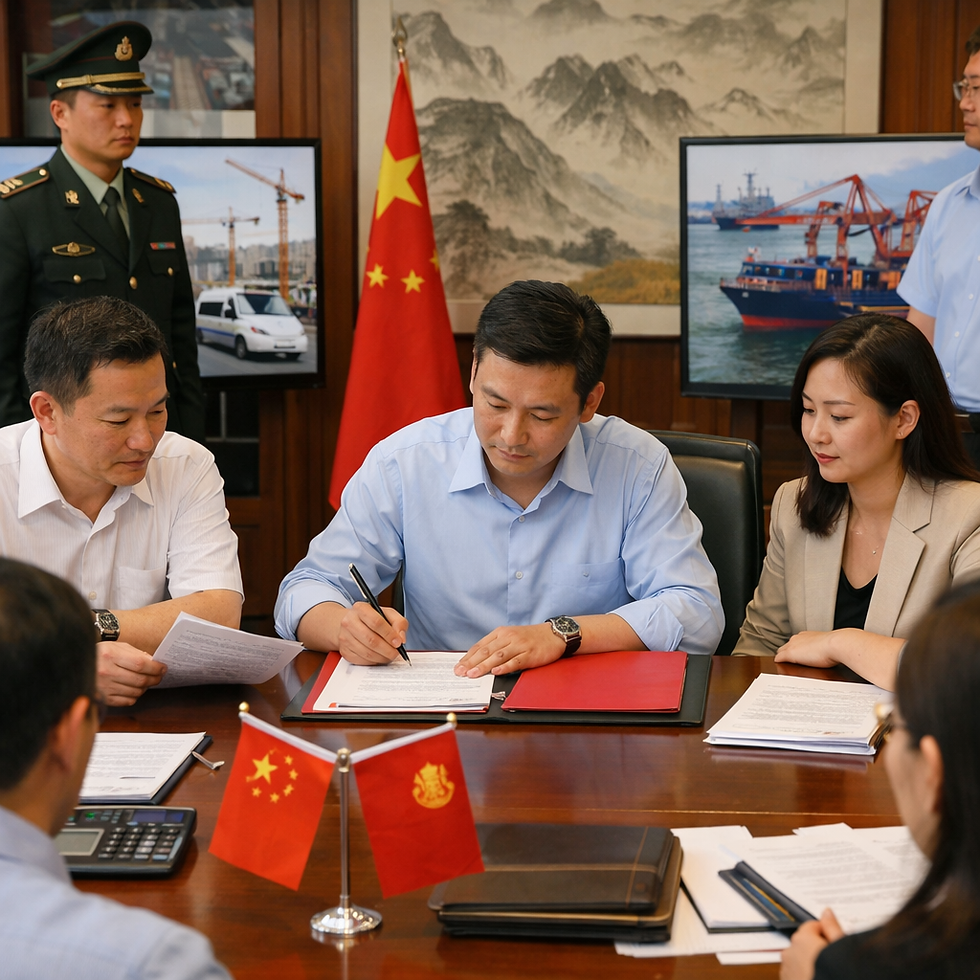
The core of these reforms, effective January 1, 2026, centers on new domestic product standards, introducing a substantial evaluated-price advantage for products manufactured or substantially transformed within China. This policy impacts direct goods procurement and even the goods components within service contracts, raising critical considerations for any company looking to secure business in the world's second-largest economy. We'll examine the specifics of these new rules, the broader regulatory context, and practical steps for navigating this evolving environment, including how platforms like TendersGo can assist in identifying these opportunities.
China's 2026 Domestic Product Rules: A Deep Dive into the Price Advantage
The most impactful change coming into effect on January 1, 2026, is the introduction of a 20% evaluated-price advantage for domestic products in government procurement of goods. This isn't a small adjustment; it's a strategic move by the MOF to prioritize goods "Made in China." What does this mean in practical terms? A domestic product, even if its initial bid price is up to 25% higher than a foreign alternative, can still win the contract after the evaluation process applies this 20% deduction. This significantly alters competitive dynamics, pushing foreign suppliers to innovate or recalibrate their pricing strategies.
Consider a scenario where a foreign product bids at 100 units, and a domestic product bids at 120 units. With the 20% evaluated-price advantage, the domestic product's evaluated price effectively becomes 96 units (120 * 0.80), making it more competitive than the foreign bid. This mechanism is designed to foster local manufacturing and supply chains. Furthermore, for bids involving multiple products, if domestic products account for at least 80% of the total product cost, the entire bid qualifies for the full 20% deduction. This incentivizes suppliers to maximize domestic content across their offerings.
The scope of these rules covers goods as defined by the Government Procurement Item Classification Catalogue, though certain items are specifically excluded in policy annexes. Suppliers must provide a "Declaration Letter on Compliance" (using an MOF-approved template) or other MOF-approved documentation to verify the domestic origin of their products. Crucially, no additional proof can be requested by procurers beyond these specified documents. False declarations, however, carry severe consequences under the Government Procurement Law, underscoring the importance of accurate and verifiable claims. Procurers are mandated to verify these claims, potentially through on-site checks by finance or industry authorities, or even third-party firms, to confirm production locations, key manufacturing steps, and the share of domestic component costs.
Broader Regulatory Context: China's Procurement Law Reforms and Strategic Goals
The 2026 domestic product rules are not an isolated policy; they are part of a larger, coordinated effort by the Chinese government to refine its procurement system. The State Council's action plan, initiated in July 2024, explicitly targets market order restoration, regulatory upgrades, and a closer alignment with international trade rules such as the WTO Government Procurement Agreement (GPA) and the Comprehensive and Progressive Agreement for Trans-Pacific Partnership (CPTPP) by 2026. This indicates a dual strategy: strengthening domestic industries while simultaneously signaling a commitment to international standards.
A significant component of this broader reform is the planned revision of the Government Procurement Law of the People's Republic of China . This foundational law, originally adopted in 2002 and amended in 2014, is being redrafted by the MOF. While the specifics of the revised law are still emerging, the emphasis is on establishing a robust domestic product standards system that ensures equal participation regardless of ownership type, supports small and medium-sized enterprises (SMEs), and promotes green procurement initiatives. Electronic platform enhancements are also a key focus, aiming to modernize and streamline the bidding process across the country. These systemic changes suggest a more sophisticated and digitally integrated procurement environment.
Beyond the domestic product preference, two other key measures are coming into effect in 2026. An MOF notice, effective February 1, 2026, aims to curb "involution-style" low bidding. This move seeks to shift the focus from purely the lowest price to a balance of quality and fair pricing, addressing concerns about unsustainable bidding practices that compromise project quality. Additionally, State Council Order No. 834, effective March 31, 2026, introduces provisions allowing procurement restrictions for non-compliance with security countermeasures, drawing authority from the National Security Law and other related statutes. This highlights an increasing emphasis on supply chain security and national interests in procurement decisions.
Understanding China's Core Procurement Framework and Authorities
At the heart of China's procurement system lies the Government Procurement Law of the People's Republic of China . While a revision is pending, the current framework, last amended in 2014, still forms the basis for legal compliance. The Ministry of Finance (MOF) serves as the central authority overseeing government procurement activities, setting policies, issuing regulations, and supervising their implementation nationwide. This centralization means that MOF pronouncements, like the 2026 domestic product rules, carry significant weight and are binding across all government agencies.
The official e-procurement portal for central government tenders is undergoing upgrades as part of the 2024 State Council plan. While specific names and URLs for the enhanced platform are not yet widely available, the move towards electronic platforms is clear. This digitalization aims to increase transparency, efficiency, and accessibility for bidders. For businesses looking to track these opportunities, regularly checking updated sources and platforms that aggregate these tenders, such as TendersGo's advanced search capabilities , becomes increasingly important.
Evaluation criteria are shifting, moving away from a purely lowest-price wins model. The 20% domestic product advantage explicitly redefines "evaluated price," meaning procurers will consider this preference when comparing bids. This fundamental change requires bidders to think beyond just their quoted price and consider how their product's origin impacts its final evaluated standing. Furthermore, China's efforts to align with international agreements like the WTO GPA and CPTPP suggest a move towards greater standardization and potentially more competitive access in certain sectors, even as domestic preferences are introduced in others.
Bidding Methods and E-Procurement Portal Registration
While the 2026 reforms primarily focus on domestic product preferences and broader policy goals, the underlying bidding methods generally follow established practices within the Chinese procurement system. These typically include open tendering, selective tendering, competitive negotiation, competitive consultation, single-source procurement, and request for quotations. Open tendering remains the most common method for larger, more complex projects, designed to attract a wide range of bidders. Each method has specific thresholds and conditions for its application, which are usually detailed in the Government Procurement Law and its implementing regulations.
For any organization wishing to participate in Chinese government tenders, registration on the relevant e-procurement portals is a prerequisite. While the central government's electronic platform is being upgraded as part of the 2024 plan, provincial and municipal governments also operate their own e-procurement systems. The registration process typically involves providing comprehensive company information, including business licenses, tax registration certificates, and legal representative details. Foreign companies often need to ensure their documentation is properly legalized and translated. Given the ongoing upgrades, it is advisable for companies to regularly check official announcements from the MOF or consult with local partners regarding the exact registration procedures and required documents for the most current platforms.
Navigating these different portals and understanding the specific requirements can be complex. Tools like TendersGo can help by aggregating tenders from various sources across China, providing a centralized point to discover opportunities, regardless of which specific portal they originated from. This can save significant time and resources for companies looking to enter or expand their presence in the Chinese market. Setting up unlimited email alerts for specific keywords, CPV codes, or regions within China can ensure that relevant tenders are never missed.
Essential Documents for Bidding in China
Successful bidding in China requires meticulous preparation of documentation. While specific requirements can vary depending on the nature of the tender and the procuring entity, several core documents are almost universally needed. For the 2026 domestic product rules, the Declaration Letter on Compliance (or MOF-approved equivalent) is now a critical addition for suppliers claiming domestic origin. This document must strictly adhere to the MOF's template and is the primary evidence for claiming the 20% evaluated-price advantage.
Beyond this new requirement, a standard set of documents typically includes:
Business License: A valid copy of the company's registration certificate. For foreign entities, this typically involves the certificate of incorporation from their home country, often requiring notarization and legalization.
Tax Registration Certificate: Proof of tax registration and good standing.
Legal Representative's ID and Authorization: Identification of the legal representative and a power of attorney if a different individual is signing the bid documents.
Financial Statements: Audited financial reports, usually for the past one to three years, to demonstrate financial stability.
Certifications and Licenses: Any industry-specific licenses, quality certifications (e.g., ISO), or product certifications relevant to the goods or services being offered.
Experience and Performance Records: Documentation of similar projects or supply contracts, including client references.
Bid Security/Bond: A guarantee, often from a bank, to ensure the bidder's commitment. The amount typically ranges from 1-2% of the bid value.
Technical Specifications and Compliance: Detailed documentation proving that the offered goods or services meet all technical requirements outlined in the tender.
Price Schedule: A comprehensive breakdown of costs, often required in a specific format.
Declaration of No Conflict of Interest: A statement confirming no conflicts with the procuring entity or other bidders.
All submitted documents, especially those from foreign entities, generally need to be translated into Mandarin Chinese by a certified translator. It's also crucial to pay attention to the validity periods of all submitted certificates and licenses. The new rules on verification of domestic product claims mean that procurers might conduct on-site checks, so all documentary evidence must be readily verifiable. Using TendersGo's AI assistance can help extract key requirements from tender documents, ensuring no critical piece of information or documentation is overlooked.
Tips for Foreign Bidders Navigating the New Chinese Procurement Landscape
For foreign companies, the 2026 reforms present both challenges and opportunities. The 20% evaluated-price advantage for domestic products is a clear signal: direct competition on price for goods where a domestic alternative exists will be significantly tougher. Here's how foreign bidders can adapt and position themselves:
Localize or Partner: Consider establishing local manufacturing or assembly operations within China to qualify for domestic product status. Alternatively, forming joint ventures or strategic partnerships with Chinese companies that meet the domestic product criteria can be a viable strategy. This also helps with navigating local regulations and market nuances.
Focus on Niche or High-Tech: Target sectors where China still relies on foreign expertise or specialized technologies that are not readily available domestically. If your product offers unique features, superior performance, or advanced technology that domestic alternatives cannot match, the price advantage might be less impactful.
Emphasize Value Beyond Price: Highlight total cost of ownership, long-term reliability, after-sales service, innovation, and environmental benefits. As China moves away from "involution-style" low bidding, quality and integrated value propositions will gain more traction.
Understand the "Substantial Transformation" Rule: For products partially manufactured in China, understand the precise definition of "substantially transformed" to see if your goods can qualify for partial or full domestic status. This might involve increasing the percentage of domestic components or moving key manufacturing steps to China.
Stay Informed on Policy Annexes: The policy excludes certain items; foreign bidders should meticulously review these annexes to identify sectors where the domestic preference may not apply, offering more level playing fields.
Proactive Engagement: Engage with potential procuring entities early to understand their specific needs and priorities. Building relationships and demonstrating a commitment to the Chinese market can be beneficial.
Leverage Digital Tools: Utilize platforms like TendersGo to monitor tender opportunities, access detailed tender documents, and stay updated on policy changes. The ability to search through millions of tenders from 220+ countries in 145 languages, with features like PDF document viewers and organization profiles, is invaluable for strategic planning.
The revised Government Procurement Law and the emphasis on supply chain security also mean that foreign companies must demonstrate robust compliance and transparency. Understanding the nuances of Chinese legal and regulatory frameworks, often requiring local legal counsel, will be vital for mitigating risks and ensuring successful bid submissions.
How TendersGo Supports Engagement in China's Evolving Procurement Market
Navigating the complexities of China's reformed procurement landscape requires comprehensive tools and up-to-date information. This is where TendersGo can be a critical asset for bid managers and export professionals.
Firstly, with its status as the world's largest tender search engine, TendersGo provides unparalleled access to government procurement opportunities across China. Despite the ongoing upgrades to China's e-procurement portals, TendersGo aggregates tenders from various central, provincial, and municipal sources, offering a single point of access. This means you can find relevant tenders, whether they are for high-tech infrastructure projects or specific goods procurement, without having to scour multiple localized platforms.
Secondly, the advanced search and filtering capabilities on TendersGo are designed to pinpoint specific opportunities amidst the vast volume of tenders. You can filter by keywords, CPV/NAICS/UNSPSC classifications, region, and even procurement authority. For instance, to identify tenders where the 20% domestic product advantage might be less impactful, you could search for highly specialized goods or services where foreign expertise is paramount. Once a tender is identified, the platform's PDF document viewer allows for immediate access and review of official tender documents, which is crucial for understanding the new domestic product requirements and other specific bidding conditions.
Finally, TendersGo helps you stay ahead of the curve with its unlimited email alerts and saved searches feature. As China's procurement policies continue to evolve, receiving real-time notifications for relevant tenders or policy updates ensures that your company is always informed and can react swiftly to new opportunities or regulatory changes. The B2B global marketplace and organization profiles also offer avenues for connecting with potential local partners, a strategy that becomes increasingly important under the new domestic preference rules. By leveraging these features, businesses can effectively monitor the dynamic Chinese market, identify strategic entry points, and prepare competitive bids tailored to the new realities of 2026 and beyond.





