Uganda Amari Power Transmission Project: $50M Gridworks Deal

The energy sector in Uganda is buzzing with activity as the Amari Power Transmission project, a landmark Independent Transmission Project (ITP), officially enters its construction phase. This US$50 million investment, driven by Gridworks, a subsidiary of British International Investment (BII), marks a significant step forward for the nation's electricity infrastructure. It is not just another project; it is Africa’s first privately led power transmission initiative to achieve financial close and move into active construction, setting a new precedent for how critical infrastructure can be developed across the continent.
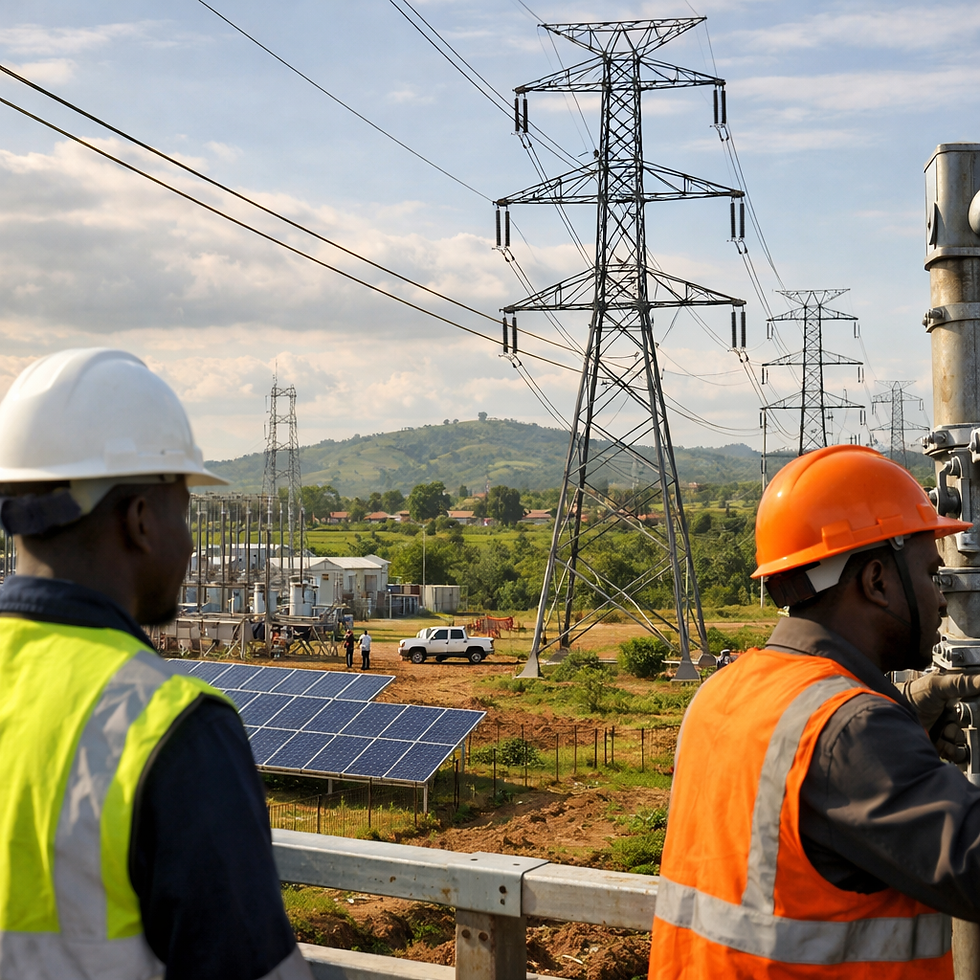
For bid managers, export managers, procurement officers, and project developers worldwide, this development signals a dynamic shift. Understanding the nuances of such privately financed projects, especially in emerging markets like Uganda, is crucial. While the major EPC contract for Amari has been awarded, the broader implications for future opportunities, particularly in supply chain and specialized services, remain relevant. Tracking these developments on platforms like TendersGo can provide a competitive edge, offering insights into regional procurement trends and potential sub-contracting avenues.
Amari Power Transmission: A New Model for Infrastructure Development
The Amari Power Transmission project, valued at US$50 million, represents a groundbreaking approach to infrastructure financing in Africa. Unlike many large-scale projects primarily funded by government budgets or multilateral development bank loans, Amari is a privately sponsored and financed Independent Transmission Project. This model, championed by Gridworks, demonstrates a growing confidence in private capital to deliver essential services, working in close collaboration with government entities.
The journey to this construction phase has been meticulously planned. Gridworks first announced the project in June 2022, alongside the Government of Uganda. Fast forward to February 4, 2026, and significant agreements were formalized: Gridworks signed an implementation agreement with Uganda’s Ministry of Energy and Mineral Development and a transmission services agreement with the Uganda Electricity Transmission Company Limited (UETCL). By March 2026, the project had successfully reached financial close, paving the way for construction to commence immediately. The ambitious target is to have the project fully commissioned by 2028.
Key Players and Strategic Partnerships
The success of the Amari project hinges on a strong partnership between private developers and government bodies. Gridworks, as the lead developer and sponsor, brings significant investment and expertise to the table. Their parent company, British International Investment (BII), underscores the international confidence in Uganda's energy sector and its potential for growth.
On the government side, the Ministry of Energy and Mineral Development has been instrumental in facilitating the necessary agreements and regulatory framework. The Uganda Electricity Transmission Company Limited (UETCL) serves as the crucial transmission utility and offtaker, ensuring the project aligns with national grid expansion plans and operational requirements. This collaborative structure is something to watch for in future projects, signaling a potential shift in how large-scale infrastructure projects are funded and executed across the region.
Project Scope and Technical Specifications
The Amari Power Transmission project zeroes in on a critical need: upgrading and modernizing key substations within Uganda’s national grid. This isn't about building entirely new transmission lines from scratch, but rather enhancing the reliability, efficiency, and capacity of existing infrastructure. The project focuses on four high-voltage substations, each playing a vital role in the country’s electricity distribution network.
Specifically, the scope of work involves upgrading the Tororo substation to 220 kV, the Nkenda substation to 132 kV, the Mbarara North substation to 132 kV, and the Mbarara South substation to 220 kV. These upgrades are not merely technical adjustments; they are strategic enhancements designed to address several critical issues. By improving these substations, Uganda aims to boost the quality of electricity supply for industrial users, significantly reduce system losses that plague many developing grids, and facilitate the integration of both existing and future renewable energy generation sources. Furthermore, these improvements will strengthen regional power trade, positioning Uganda as a more robust player in the East African power pool.
The Role of Siemens Energy as EPC Contractor
With the project now in its construction phase, the appointment of Siemens Energy as the Engineering, Procurement, and Construction (EPC) contractor is a significant detail. Siemens Energy is a global leader in energy technology, known for its expertise in power generation, transmission, and industrial applications. Their involvement brings world-class engineering and project management capabilities to the Amari project.
While the main EPC contract has been awarded, it's worth noting that large-scale projects like this often generate numerous sub-contracting opportunities. These can range from civil works, specialized equipment supply, logistics, and local labor provisions. Companies looking to participate in Uganda’s burgeoning energy sector should monitor the project's progress. Platforms like TendersGo's advanced search and filtering tools can be invaluable for identifying potential subsequent tenders or partnership opportunities that may arise from such a major undertaking.
Procurement Insights and Future Opportunities
For those closely watching the procurement landscape, the Amari Power Transmission project highlights a crucial point: the major tender for this specific US$50 million investment has already concluded. With Siemens Energy appointed as the EPC contractor, the primary procurement phase for the core project components is complete. This means there are no open tenders directly related to the main Amari project package at this moment.
However, the journey of such a significant infrastructure project is long and complex, often creating a ripple effect of smaller, specialized opportunities. While the current status is "completed/awarded/closed" for the main contract, astute businesses should look beyond the immediate. Subcontracting work, specialized services, maintenance contracts post-commissioning, and the supply of auxiliary equipment often follow such large-scale developments. This is where a proactive approach to market intelligence becomes critical. Setting up unlimited email alerts on TendersGo for keywords like "Uganda energy," "substation upgrades," or even specific components can help identify these secondary opportunities as they emerge.
Navigating Uganda's Procurement Environment
Participating in procurement within Uganda, whether directly with government entities or through major contractors, requires an understanding of local regulations and business practices. The official language for business and government in Uganda is English, which simplifies documentation for international bidders. However, familiarity with local content requirements, tax regulations, and supplier registration processes is still essential.
Companies interested in future opportunities, either related to Amari's ongoing construction or other energy projects in Uganda, should prepare comprehensive company profiles and documentation. This typically includes legal registration, financial statements, technical qualifications, and past project experience. Utilizing TendersGo’s organization profiles and company information pages can help businesses showcase their capabilities to potential partners and clients globally. Having these details ready significantly speeds up the response time when a relevant tender or partnership opportunity arises.
Environmental and Social Considerations
While the primary focus of the Amari project is on technical upgrades and grid improvement, modern infrastructure development inherently carries environmental and social responsibilities. The publicly stated objectives of the project, such as improving electricity supply quality, reducing system losses, and integrating renewable generation, all contribute positively to sustainable development.
However, for a project of this scale, detailed Environmental and Social Impact Assessments (ESIAs) are standard practice. These assessments typically evaluate potential impacts like land acquisition, noise pollution during construction, waste management, and community engagement. While specific ESIA documents for Amari were not identified in the initial research, it is prudent for any company considering involvement, even at a sub-contracting level, to seek out and understand these documents directly from the project sponsor, Gridworks, or the relevant Ugandan regulatory bodies. Adherence to international best practices in environmental and social governance (ESG) is increasingly a prerequisite for participation in major projects, and demonstrating this commitment can be a significant differentiator.
Looking Ahead: Uganda's Energy Future
The Amari Power Transmission project is more than just a US$50 million investment; it is a clear indicator of Uganda's commitment to strengthening its energy infrastructure and expanding access to reliable power. The successful financial close and commencement of construction for Africa’s first privately led ITP could well serve as a blueprint for similar projects across the continent.
As Uganda continues its development trajectory, the demand for robust and efficient energy systems will only grow. This includes not only transmission infrastructure but also generation capacity, distribution networks, and the integration of diverse energy sources. For businesses in the energy sector, keeping a close watch on Uganda’s National Development Plans and the procurement announcements from entities like UETCL and the Ministry of Energy and Mineral Development will be essential. The TendersGo platform, with its coverage of 220+ countries and 145 languages , provides a comprehensive view of the global tender market, making it an indispensable tool for those looking to participate in Uganda’s energy transformation and beyond.