
Tunisia Water Security Project 2026: SONEDE Desalination

Tunisia is making significant strides in bolstering its water infrastructure, a critical move in a region increasingly facing water scarcity. The year 2026 marks a pivotal moment with the official launch of the Potable Water Security and Resilience Project, a comprehensive initiative designed to enhance water supply and distribution across several key governorates. This ambitious undertaking, led by the Ministry of Agriculture, Hydraulic Resources and Fisheries (MARHP) and the Société Nationale d’Exploitation et de Distribution des Eaux (SONEDE), represents a substantial investment in the nation's future, with a total budget of US$248 million.
The project, formally designated P514340 by the World Bank, received its official stamp of approval on April 1, 2026, following an appraisal window earlier in the year. This approval unlocks a significant IBRD loan of US$208.5 million, complemented by co-financing from the Arab Fund for Economic and Social Development (AFESD). For bid managers, export managers, and procurement officers worldwide, this signals a robust pipeline of opportunities in the water and sanitation sector, particularly for those specializing in desalination technology, smart metering solutions, and large-scale infrastructure rehabilitation. Keeping track of such developments is vital, and platforms like TendersGo provide the tools to monitor these opportunities as they emerge.
Tunisia's Water Security Imperative: The Potable Water Security and Resilience Project
Tunisia's commitment to water security is more pressing than ever. The Potable Water Security and Resilience Project, with its substantial US$248 million budget, directly addresses the challenges of water availability and efficient distribution. This project isn't just about building new facilities; it’s about creating a more resilient and sustainable water future for approximately 2.3 million people across the country. The implementing agencies, MARHP and SONEDE, are at the forefront of this effort, guiding the technical execution and ensuring the project's alignment with national development goals.
The financial backing from the World Bank's IBRD loan and AFESD co-financing underscores the international community's recognition of Tunisia's water challenges and its potential for sustainable solutions. Such large-scale, internationally funded projects typically follow rigorous procurement guidelines, offering transparency and fair competition for qualified bidders. Businesses looking to participate should familiarize themselves with the World Bank's procurement frameworks and SONEDE's specific requirements, which will be detailed as component-level tenders are released. Staying informed on these details is where services like TendersGo's advanced search capabilities become invaluable, allowing users to pinpoint opportunities within Tunisia's water sector.
Expanding Zarat: The Heart of the Desalination Strategy
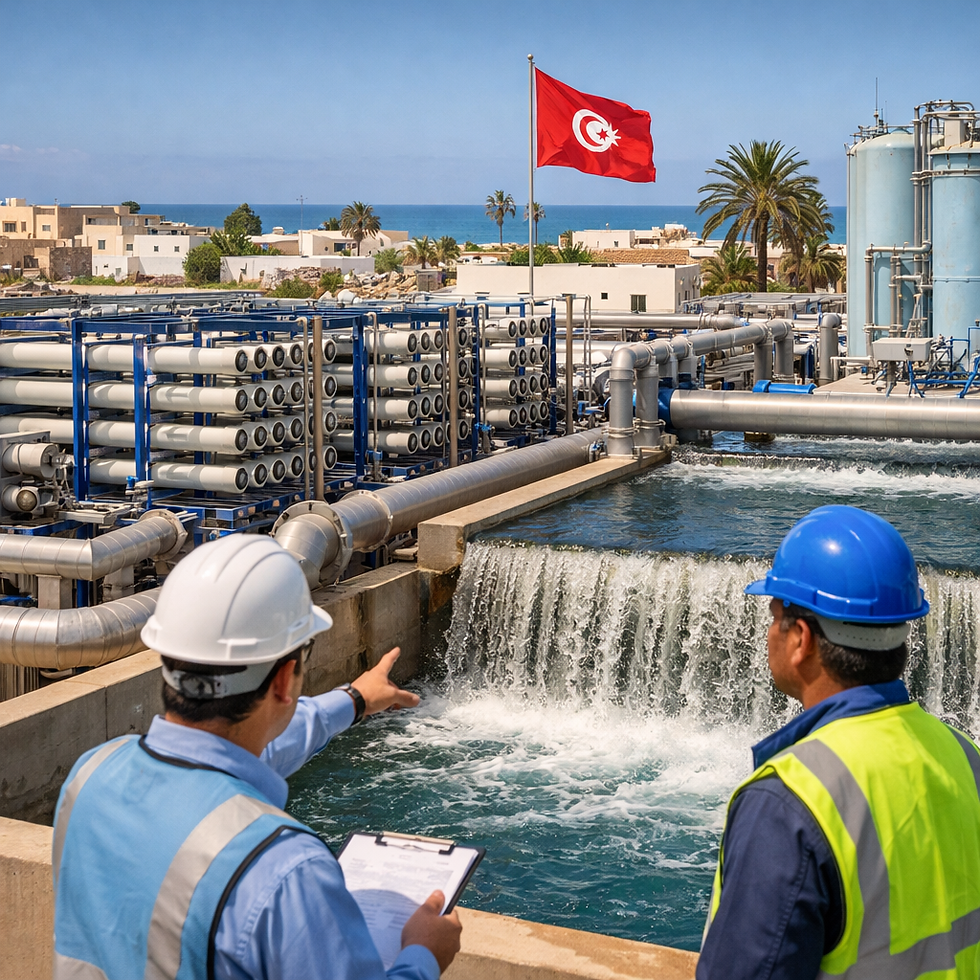
At the core of this ambitious project is the significant expansion of the Zarat seawater desalination plant in Gabès. This facility is already a critical source of drinking water for Gabès, Médenine, and Tataouine. The project aims to double its capacity, boosting production from 50,000 cubic meters per day to an impressive 100,000 cubic meters per day. This expansion is not merely an increase in volume; it represents a strategic move to secure potable water supplies for hundreds of thousands of Tunisians, particularly in the southern governorates where water stress is often more pronounced.
The Zarat expansion will undoubtedly generate considerable procurement opportunities for companies specializing in desalination technologies, including reverse osmosis systems, energy recovery devices, and advanced filtration solutions. Beyond the core desalination units, there will be a need for civil engineering works, electrical infrastructure, control systems, and associated pipelines. Given the plant's operational importance, and recent reports from September 2026 about supply disruptions, the reliability and efficiency of new installations will be paramount. Companies with a proven track record in delivering robust, high-performance desalination solutions will find themselves well-positioned for these upcoming tenders. It's a prime example of where setting up unlimited email alerts on TendersGo for Tunisia's water sector can provide a competitive edge.
Beyond Desalination: Comprehensive Water Infrastructure Upgrades
While the Zarat desalination expansion captures significant attention, the Potable Water Security and Resilience Project extends far beyond a single plant. It encompasses a multi-faceted approach to water infrastructure improvement, touching upon distribution, efficiency, and system resilience. One key component involves the installation of 100,000 smart meters. This initiative aims to modernize water consumption tracking, reduce non-revenue water, and empower consumers with better insights into their usage, contributing to overall water conservation efforts.
Furthermore, the project includes the crucial rehabilitation of water distribution networks in three key governorates: Sfax, Tozeur, and Kebili. Aging infrastructure can lead to significant water losses and service interruptions, so these upgrades are essential for improving supply reliability and water quality for 440,000 people. Concurrently, the southern conveyance systems, vital for transferring water from the expanded Zarat plant, will also undergo reinforcement. This comprehensive approach ensures that water not only gets produced efficiently but also reaches consumers reliably. For companies specializing in smart metering technology, pipeline rehabilitation, and large-scale water conveyance, these components represent direct avenues for engagement. Procurement officers might want to add their organization profiles on TendersGo to showcase their capabilities for these specific types of projects.
Procurement Pathways: Navigating Opportunities in Tunisia
As of April 2026, with the project officially approved and implementation underway, the focus shifts to the detailed procurement phase. While no specific open tender packages have been identified at the project-level yet, the nature of the project components suggests a steady stream of individual contracts. These will likely cover everything from engineering, procurement, and construction (EPC) contracts for the Zarat expansion to supply contracts for smart meters, and specialized services for network rehabilitation.
Companies interested in participating should prepare by understanding the specific requirements of SONEDE and the World Bank's procurement guidelines. Typically, these involve demonstrating financial capacity, technical expertise, and relevant past experience in similar projects. Required documents often include company registration, financial statements, technical proposals, and detailed methodologies. It's also important to note that the project includes a Stakeholder Engagement Plan (PMPP/SEP) and an Environmental and Social Commitment Plan (ESCP), indicating that bidders will need to demonstrate adherence to robust environmental and social safeguards. Staying updated on the release of these component-level tenders is paramount, and platforms like TendersGo, with its 220+ countries and 145 languages coverage , can be instrumental in identifying and tracking these opportunities as they become available.
Economic and Social Impact: A Broader Vision for Tunisia
Beyond the immediate technical deliverables, the Potable Water Security and Resilience Project is set to deliver significant economic and social benefits for Tunisia. The World Bank estimates that approximately 2.3 million people will benefit overall, with 224,000 experiencing continuous water supply and 440,000 enjoying improved water quality. These improvements are fundamental to public health, economic productivity, and overall quality of life.
Furthermore, the project is projected to create substantial employment opportunities. An estimated 600 permanent jobs and 6,000 temporary jobs are expected to be generated throughout the project lifecycle. This influx of employment will provide a welcome boost to local economies, fostering skill development and contributing to economic stability. For companies considering entering the Tunisian market, this project offers not just commercial prospects but also an opportunity to contribute to a nation's sustainable development. Tracking the progress of this and similar projects on TendersGo's B2B global marketplace can help identify potential partners and local subcontractors, which is often a requirement for international tenders.
Looking Ahead: Sustaining Tunisia's Water Future
The Potable Water Security and Resilience Project represents a significant leap forward for Tunisia's water sector. With the Zarat desalination plant doubling its capacity, extensive network rehabilitation, and the rollout of smart metering, the nation is building a more resilient and efficient water infrastructure. The project’s focus on organizational modernization within SONEDE further indicates a long-term vision for sustainable water management.
As the implementation phases progress, detailed tender notices for specific components will begin to emerge. Companies interested in contributing to this vital initiative should proactively monitor official channels, including SONEDE's procurement portal and international tender aggregators. The scale and scope of this US$248 million investment promise a steady stream of procurement opportunities for the foreseeable future, making Tunisia a key market for water infrastructure specialists. Staying ahead of these developments requires diligent monitoring and the right tools, ensuring no opportunity is missed in this dynamic sector.





