
Reunion Express: 2026 rail project worth up to €6B

The island of Réunion is on the cusp of a transformative infrastructure undertaking, one that promises to redefine its public transport landscape for generations. The proposed Réunion Express, officially known as the "train express régional de La Réunion," is currently in its crucial public debate phase, with an estimated budget ranging from €5.2 billion to €6.0 billion. This ambitious rail project, designed to connect the island's main urban centers, represents a significant investment in the region's future, impacting not only daily commutes but also economic development and environmental sustainability. For bid managers, export managers, and procurement officers worldwide, understanding the intricacies of this project and its procurement timeline is essential for identifying future opportunities in Réunion transport infrastructure investment.
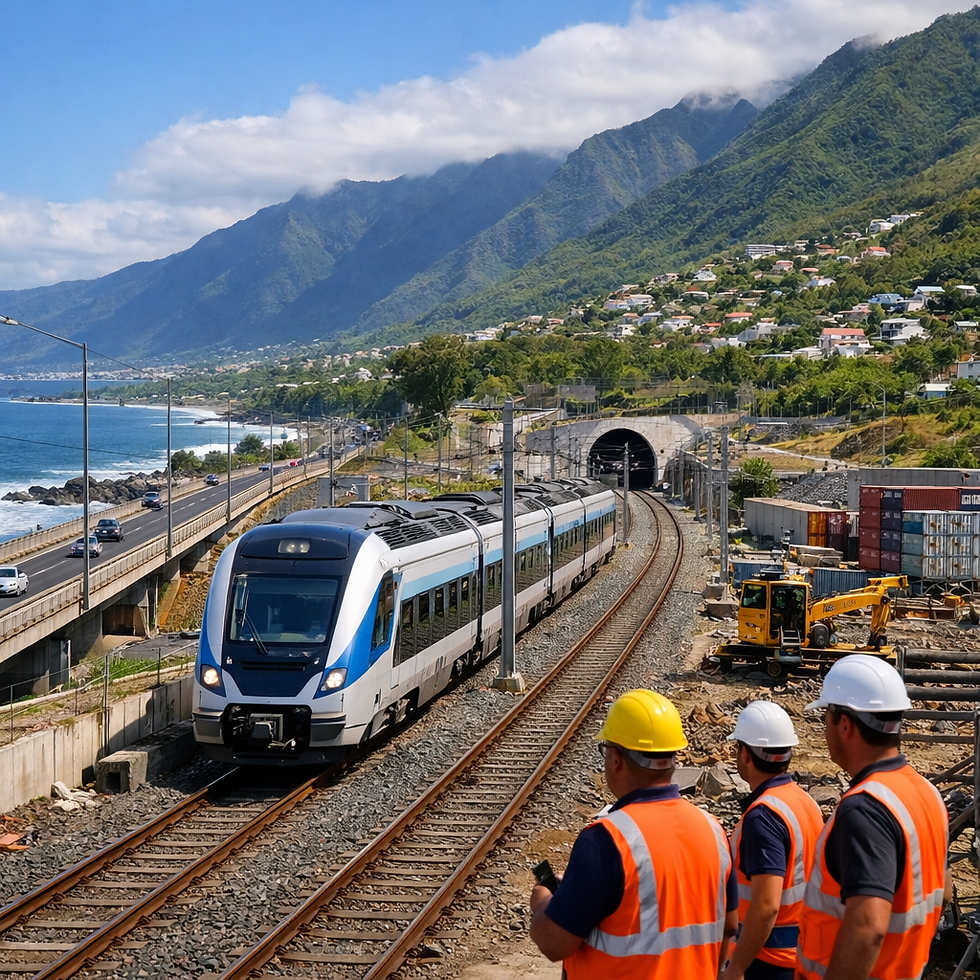
Currently, the project is undergoing a public consultation process supervised by the Commission Nationale du Débat Public (CNDP), which is scheduled to run from August 19, 2026, to November 26, 2026. This period is vital for shaping the project's final scope and addressing its acknowledged environmental and social considerations. While construction tenders are not yet open, the sheer scale of the Réunion Express, with its projected 140 km of new rail and 25 stations, signals a wealth of upcoming procurement opportunities across various sectors.
Réunion Express: A €6 Billion Vision for Island Connectivity
The Réunion Express is not just a railway; it's a strategic initiative aiming to connect the island's northern and southern regions, traversing its primary urban areas. This massive undertaking carries a substantial price tag, with the verified project budget currently set between €5.2 billion and €6.0 billion. Such figures immediately capture attention, highlighting the project's economic significance and the extensive resources that will be mobilized over its multi-decade timeline.
A breakdown of the budget provides a clearer picture of where these funds are expected to be allocated. Rail infrastructure alone accounts for an estimated €3.1 billion, covering tracks, bridges, tunnels, and other foundational elements. Another €1.0 billion is earmarked for systems and equipment, which includes everything from signaling and telecommunications to power supply and control centers. Rolling stock, the trains themselves, will require approximately €280 million, while maintenance operations are projected at €160 million. These figures indicate a wide array of specialized procurement needs, from heavy construction materials to advanced technological systems and long-term service contracts. Keeping track of these evolving requirements can be done effectively using TendersGo's advanced search and filtering capabilities, allowing businesses to pinpoint relevant opportunities as they emerge.
Navigating the Project Timeline and Implementation Agencies
Understanding the timeline and the key agencies involved is paramount for any organization considering participation in the Réunion Express project. We are currently in a pre-procurement phase, with the critical public debate ending on November 26, 2026. This debate is not a mere formality; it's a period where environmental impacts, social issues, and economic considerations are thoroughly discussed, potentially leading to adjustments in the project's scope or phasing.
The Région Réunion acts as the project owner during this public debate process. However, the operational steering of the Réunion Express is planned to be handled by the Société Réunionnaise des Grands Projets (SRGP). This entity is reportedly in creation, involving the Region and the island’s five intercommunal bodies, suggesting a collaborative governance structure. For companies looking to engage, establishing relationships with these regional bodies and understanding their specific requirements will be crucial. While direct tenders are not yet live, savvy businesses are already researching these organizations on platforms like TendersGo's organization profiles to understand their procurement history and partnership structures.
The project's timeline extends far into the future, with the first works anticipated to begin in 2030. Partial commissioning of the network is expected around 2035, and the full network completion is projected for 2050. This phased approach, with an early segment envisioned between Saint-Benoît and Saint-Denis, means that procurement opportunities will also be staggered over many years. This long-term horizon demands a strategic approach to market entry and capability development, ensuring businesses are ready for tenders when they are eventually published.
Procurement Outlook: What to Expect in the Coming Years
Given that the Réunion Express is currently in its public debate phase, no open tenders have been identified. However, the sheer scale and complexity of a project aiming for 140 km of new rail and 25 stations mean that a vast array of procurement opportunities will inevitably arise. The transition from public debate to detailed design and then to construction will unlock numerous contracts across various sectors.
Companies should anticipate tenders for civil engineering works, including track laying, bridge construction, tunnel boring, and station building. There will be significant demand for specialized equipment, such as heavy machinery, rail components, signaling systems, and telecommunications infrastructure. The rolling stock component, valued at €280 million, will lead to tenders for the design, manufacture, and delivery of trains. Furthermore, the long-term nature of the project indicates future procurement for maintenance services, operational support, and potentially even passenger information systems. This breadth of opportunity means that businesses from diverse backgrounds, from construction giants to specialized tech firms, could find a place in this project.
To stay ahead, proactive monitoring of the project's progress and official announcements from the Région Réunion and the nascent SRGP is vital. Setting up unlimited email alerts for "Reunion rail," "transport infrastructure," or specific CPV/NAICS/UNSPSC classification codes on platforms like TendersGo will ensure that potential bidders are notified immediately once pre-qualification notices or tender documents become available. While the project is still pre-procurement, the time to prepare is now, by understanding the local regulatory environment, potential partners, and the technical requirements likely to be demanded.
Technical Scope and Potential for Freight Operations
The technical ambition of the Réunion Express is impressive. The project envisions approximately 140 kilometers of new rail infrastructure, punctuated by 25 stations, designed to create a seamless connection across the island's primary population centers. This extensive network is projected to serve a substantial daily passenger capacity, estimated by the CNDP at 100,000 individuals. Such a figure indicates a significant shift in the island's transportation habits and a high demand for efficient, reliable rail services.
Beyond passenger transport, the CNDP has also highlighted the potential for freight use. This dual-purpose capability could add another layer of economic impact, facilitating the movement of goods across Réunion and potentially reducing road congestion. For companies specializing in logistics, cargo handling, or even multi-modal transport solutions, this aspect of the project opens up additional avenues for future engagement. The integration of freight services would require specific infrastructure, loading/unloading facilities, and potentially specialized rolling stock, creating a distinct set of procurement needs. Organizations can utilize TendersGo's comprehensive search features to track tenders related to both passenger and freight railway systems.
Funding, Environmental Impact, and Local Considerations
As with any project of this magnitude, funding remains a critical, albeit not yet finalized, aspect. While the total budget is estimated between €5.2 billion and €6.0 billion, the specific mix of government funding, borrowing, and other financing mechanisms has not been confirmed. This is typical for projects in the public debate stage, as financial models often evolve based on public input, technical adjustments, and economic feasibility studies. Potential bidders should closely follow announcements regarding funding sources, as this can influence payment terms, project stability, and long-term contractual arrangements.
Equally important are the environmental and social impacts. The CNDP explicitly notes that the Réunion Express presents "significant environmental impacts and major territorial, social, and economic issues." This acknowledgment means that environmental impact assessments, mitigation strategies, and social responsibility will be central to the project's execution. Companies bidding on tenders will likely need to demonstrate strong environmental credentials, adherence to international best practices, and a commitment to local community engagement. This could include requirements for sustainable construction materials, energy-efficient designs, and plans for minimizing ecological disruption. Furthermore, the project's focus on public transport aims to reduce reliance on private vehicles, contributing to cleaner air and reduced carbon emissions across the island.
Preparing for Future Opportunities: A Practical Guide
For businesses aiming to participate in the Réunion Express project, preparation is key. While no immediate tenders are open, the public debate ending in November 2026 marks a crucial milestone. After this, we can anticipate more detailed project specifications, pre-qualification notices, and eventually, calls for bids. Companies should begin by thoroughly researching the Région Réunion and the anticipated structure of the Société Réunionnaise des Grands Projets (SRGP). Understanding their procurement policies, preferred contract types, and historical partners will provide a significant advantage.
It's also essential to assess your company's capabilities against the project's technical scope. Do you specialize in rail infrastructure, signaling, rolling stock manufacturing, or perhaps environmental consulting? Begin identifying potential local partners in Réunion or France, as collaboration can often strengthen bids and demonstrate local commitment. Language proficiency, primarily French, will be crucial for navigating official documents and communications. Leveraging platforms like TendersGo, with its 145 languages and AI-powered summaries, can help overcome linguistic barriers and quickly digest complex tender documents once they are released. Creating a strong company profile on TendersGo's global B2B marketplace can also increase visibility among potential partners and contracting agencies. The long-term nature of the Réunion Express project means that strategic positioning now will yield dividends for years to come.


