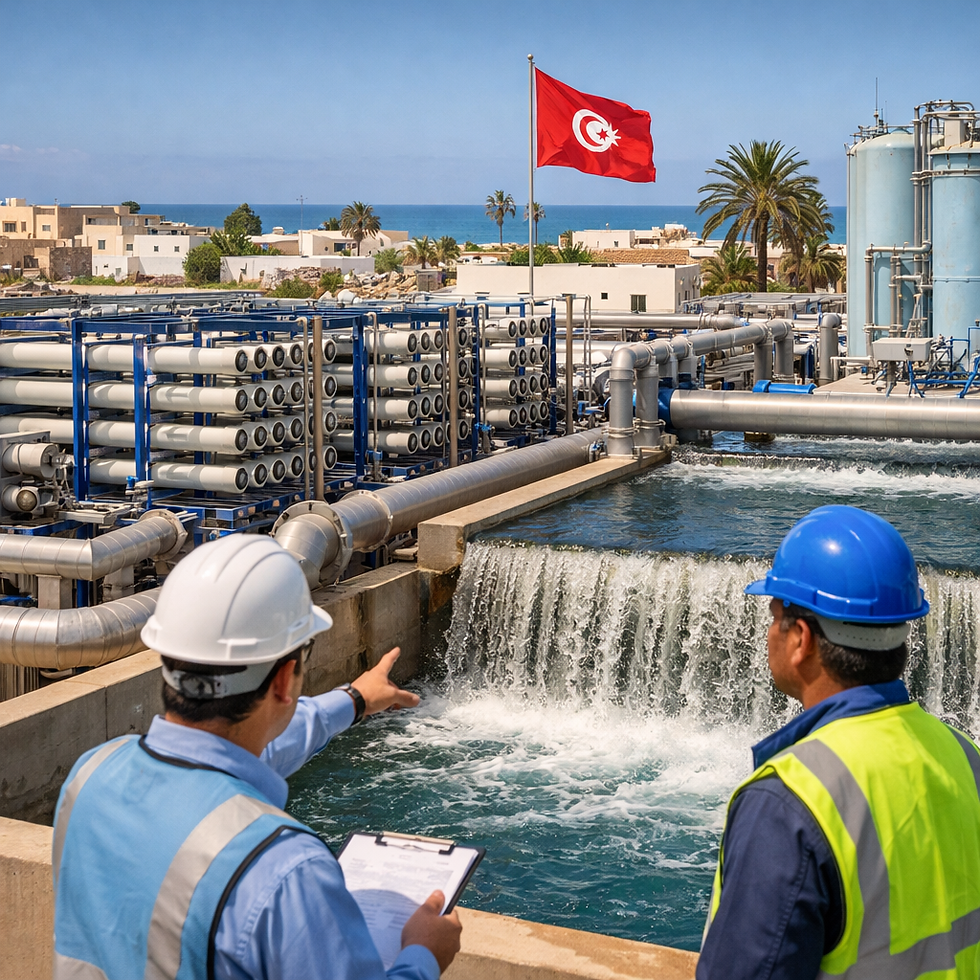
Malta's €35M Għar Lapsi Reverse Osmosis Plant

Malta's critical water infrastructure is set for a significant upgrade with the Water Services Corporation (WSC) initiating procurement for a new €35 million reverse osmosis plant at Għar Lapsi. This substantial investment, officially designated as WSC/T/064/2026, aims to bolster the nation's potable water supply by adding 30,000 cubic meters daily. As an open tender, this project presents a prime opportunity for international contractors specializing in desalination technology and large-scale infrastructure development.

The project, specifically called "New Plant B at the Għar Lapsi Reverse Osmosis Plant," underscores Malta's ongoing commitment to water security, a perpetual challenge for island nations. The WSC has published the tender with a clear scope for the design, build, commissioning, and transfer of this state-of-the-art facility. Companies keen on participating in the Malta Għar Lapsi reverse osmosis plant tender 2026 should note the tight submission deadline and the explicit requirement for environmentally friendly measures.
Malta's Strategic Water Investment: The Għar Lapsi Expansion
The Water Services Corporation (WSC) in Malta is driving forward with a major infrastructure initiative, inviting bids for the Għar Lapsi Reverse Osmosis Plant expansion. This isn't just another project; it's a strategic move to secure Malta's future water supply, particularly crucial given the island's limited natural freshwater resources. The tender, WSC/T/064/2026, focuses on the establishment of "Plant B," a significant addition to the existing Għar Lapsi facility.
With an estimated budget of €35 million, excluding VAT, this Malta water infrastructure project is substantial. While no official USD equivalent was provided in the tender materials, a rough estimate places it in the US$38-39 million range, making it an attractive prospect for global players. Funding for this critical development is expected to come fully or partly from EU funds, indicating its alignment with broader European environmental and infrastructure goals.
The project's core objective is to deliver an additional 30,000 cubic meters of potable water per day. This will be achieved through the implementation of six independent reverse osmosis systems, designed to ensure resilience and operational flexibility. For companies looking to track such high-value infrastructure projects, TendersGo offers advanced search and filtering capabilities , allowing users to pinpoint opportunities like the Malta Għar Lapsi reverse osmosis plant tender 2026 by region, sector, and budget.
Unpacking the Tender: Scope, Timeline, and Environmental Mandates
The Għar Lapsi reverse osmosis plant budget and timeline are clearly defined within the tender documentation. The successful bidder will be responsible for the complete lifecycle of the new plant, from initial design through to construction, commissioning, and eventual transfer to the WSC. This "Design, Build, Commissioning and Transfer" (DBCT) model is common for complex infrastructure projects, placing significant responsibility on the contractor.
The project timeline is ambitious, set for a total duration of 150 weeks. This includes a critical milestone: the first three reverse osmosis systems must be commissioned within 125 weeks. The remaining three systems are then expected to be operational within an additional 25 weeks. Such a phased approach likely reflects the urgency of increasing Malta's water production capacity.
A particularly important aspect of this tender is the explicit requirement for "environmentally friendly measures." This aligns with modern procurement trends and EU directives, emphasizing sustainable development. Bidders will need to demonstrate how their proposed solutions minimize environmental impact, from energy consumption to brine disposal. Furthermore, the tender references FIDIC conditions, which are internationally recognized standard forms of contract for construction and engineering projects, providing a familiar framework for experienced international bidders.
Navigating the Procurement Process: Key Dates and Requirements
For any company considering a bid on this Malta water sanitation tender, understanding the procurement schedule is paramount. The tender, WSC/T/064/2026, was published on August 11, 2026, with a submission deadline of October 16, 2026, at 09:30 AM. This gives prospective bidders a concentrated period to prepare their comprehensive proposals.
The WSC has scheduled several key clarification and interaction points to assist bidders. The first clarification meeting and site visit took place on August 28, 2026, offering a crucial opportunity for bidders to assess the project site and ask initial questions. A second clarification meeting was held on September 9, 2026, followed by a deadline for all questions by September 17, 2026. These interactions are vital for ensuring all bidders have a clear understanding of the project's intricacies and the WSC's expectations.
Bidders should be prepared to submit detailed proposals covering their technical capabilities, environmental strategies, and financial viability. Experience with similar large-scale desalination projects, particularly those involving FIDIC contracts and EU funding requirements, will undoubtedly be an advantage. For bid managers, staying on top of these deadlines and requirements is simplified by using platforms like TendersGo, where unlimited email alerts can be set up for Malta tenders and specific project references, ensuring no critical update is missed.
Practicalities for International Bidders: Language, Documents, and Local Insights
Participating in a tender of this magnitude in Malta requires careful attention to practical details. While English is widely spoken and generally the language of international business and tender documents, understanding the local procurement culture can be beneficial. Malta's procurement framework largely aligns with EU standards, which means transparency and adherence to strict guidelines are expected.
Key documents required will likely include detailed technical specifications of the proposed reverse osmosis systems, environmental impact assessments, project management plans, and comprehensive financial proposals. Companies will need to demonstrate their legal and financial standing, often through audited financial statements and proof of relevant certifications. Furthermore, details on the proposed team, their experience, and qualifications will be critical.
Familiarity with the FIDIC contract conditions is not just a recommendation but a stated requirement for this project. This implies a need for legal teams to be well-versed in these international standards. For companies new to Malta, exploring local partnerships or engaging local consultants can provide valuable insights into regulatory nuances and logistical considerations. TendersGo also offers a global B2B marketplace where companies can explore potential collaborations and find local partners who understand the Malta market.
The Broader Context: Malta's Desalination Investment Strategy
The €35 million Għar Lapsi reverse osmosis plant represents a significant component of the Water Services Corporation Malta desalination investment 2026 strategy. This project is not an isolated initiative but part of a larger national investment program by the WSC to expand and modernize Malta's water production and distribution infrastructure. As an island nation with a growing population and tourism sector, ensuring a stable and secure potable water supply is a continuous priority.
Malta relies heavily on desalination to meet its water demands, and investments in new, more efficient, and environmentally sustainable reverse osmosis technologies are crucial. The emphasis on "environmentally friendly measures" in the WSC/T/064/2026 tender reflects a broader commitment to reducing the energy footprint and environmental impact associated with desalination processes. This aligns with global trends towards green infrastructure and sustainable resource management.
Future tender opportunities related to water infrastructure in Malta are likely to emerge as the WSC continues to execute its national investment plan. These could include projects for water distribution networks, wastewater treatment, and potentially further upgrades to existing desalination facilities. Companies that successfully engage with the Għar Lapsi project may find themselves well-positioned for these upcoming opportunities.
Preparing for Future Opportunities with TendersGo
For bid managers, export managers, and project developers, staying informed about such critical infrastructure projects is essential. The Malta Għar Lapsi reverse osmosis plant tender 2026 is a prime example of a high-value opportunity in a vital sector. Utilizing platforms like TendersGo allows professionals to efficiently search, monitor, and prepare for these tenders.
With its coverage of 220+ countries and tenders in 145 languages, TendersGo provides a truly global reach. Features such as AI-powered summaries of tender documents and a PDF document viewer can significantly reduce the time spent on initial assessment. Furthermore, the ability to filter tenders by CPV/NAICS/UNSPSC classification ensures that only the most relevant opportunities are presented. For those interested in the Għar Lapsi project and similar future endeavors, setting up saved searches and unlimited email alerts for Malta's water sector is a proactive step. This ensures that any subsequent phases or related projects by the Water Services Corporation are identified promptly, allowing ample time for comprehensive bid preparation and strategic planning.