
Lithuania Kelmė Wind Farm investment 2026

Lithuania's commitment to renewable energy has taken a tangible, impactful form with the full commercial operation of the Kelmė wind farm. This significant investment, reaching up to EUR 550 million, underscores the nation's drive for energy independence and a greener future. For bid managers, export managers, and procurement officers globally, understanding projects like Kelmė provides crucial insights into the types of large-scale infrastructure developments shaping regional markets, particularly in the energy and power sectors in Lithuania in 2026. While the main procurement for this project is complete, the ripple effects and future opportunities stemming from such a massive undertaking are certainly worth exploring.
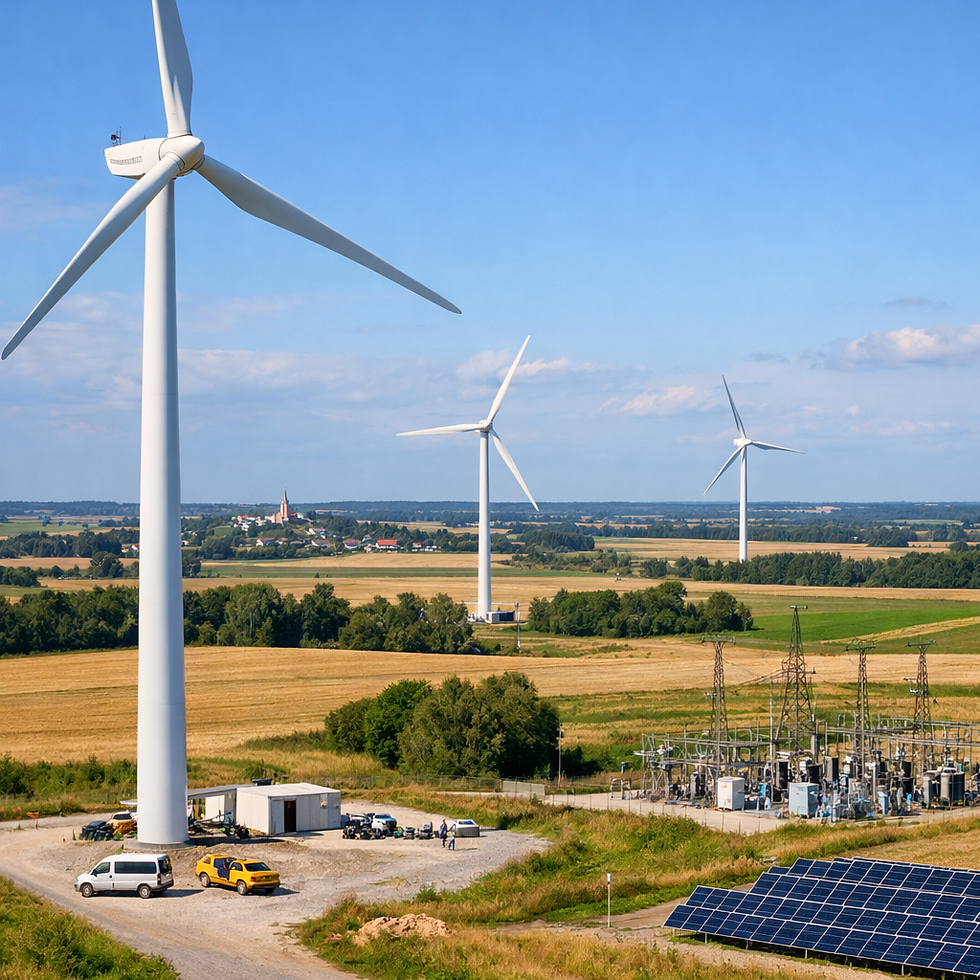
The Kelmė wind farm, a 314 MW onshore facility, now stands as the largest operating wind site across the Baltic region. Its journey from a conditional acquisition in June 2023 to full commercial operation by June 2025 highlights a rapid development cycle, fueled by substantial international and local financing. These projects are not just about megawatts; they represent a complex web of financing, engineering, logistics, and regulatory navigation, all of which offer lessons for those looking to participate in similar ventures worldwide. Keeping an eye on these developments, perhaps through dedicated TendersGo email alerts for Lithuania tenders , can provide an edge in identifying emerging needs.
Kelmė Wind Farm: A Landmark Project's Specifications and Scope
The Kelmė wind farm, situated in the Kelmė district of central/western Lithuania, represents a monumental leap in the country's renewable energy capacity. Developed by AB “Ignitis grupė” and its subsidiary UAB “Ignitis Renewables,” this onshore wind farm boasts a total installed capacity of 314 MW. To put that into perspective, its combined annual generation is estimated at about 740 GWh, sufficient to power approximately 250,000 households. This isn't just a number; it's a significant contribution to Lithuania's energy security and decarbonization goals, providing zero-carbon electricity on a grand scale.
The project was executed in two distinct phases, each contributing substantially to the overall capacity. Kelmė Wind Farm I, with a capacity of 114.1 MW, incorporates 16 Nordex N163/6.X turbines. This phase reached its Commercial Operation Date (COD) in April 2025. Following closely, Kelmė Wind Farm II, a more substantial phase, added 199.6 MW to the grid, utilizing 28 of the same Nordex N163/6.X turbines. This second phase achieved its COD later in 2025, bringing the entire complex to full commercial operation by June 2025. The choice of Nordex turbines, a prominent manufacturer in the wind energy sector, speaks to the project's reliance on established technology and expertise.
While the primary procurement for the wind farm's construction and turbine supply is complete, the operational phase of such a large-scale asset inevitably generates ongoing needs. These can range from maintenance contracts, spare parts procurement, and digital solutions for performance monitoring to potential future expansion or grid integration enhancements. Organizations with specialized services in these areas might find opportunities by tracking the operational requirements of Ignitis Renewables. Using an advanced search and filtering tool on TendersGo , focusing on "Lithuania," "energy," and "maintenance," could reveal related opportunities as they arise.
Financing the Future: The Multi-Lender Approach Behind Kelmė
The financial architecture supporting the Kelmė wind farm is as impressive as its technical specifications, demonstrating a collaborative effort from major international financial institutions. The total project investment reached up to EUR 550 million, covering both the acquisition price and construction costs. This substantial sum was raised through a mixed project-finance structure, a common approach for large-scale infrastructure developments that mitigates risk and brings diverse expertise to the table.
Leading the financing consortium was the European Investment Bank (EIB), which committed EUR 250 million to the project. The EIB's involvement is a strong indicator of the project's alignment with European Union energy policy objectives, particularly those promoting renewable energy and climate action. Complementing the EIB's support were other key financial players: the European Bank for Reconstruction and Development (EBRD), Swedbank, and the Nordic Investment Bank (NIB). Together, this consortium assembled an overall financing package reported at EUR 318 million, channeling vital capital into Lithuania's green transition.
For companies and consultants specializing in financial advisory, project management, or even legal services related to large-scale infrastructure, understanding these financing structures is crucial. The involvement of multiple lenders often means adherence to international procurement standards and environmental and social safeguards. While the initial financing is complete, the ongoing management of such a significant investment can still present opportunities for specialized services. Companies can create organization profiles on TendersGo to showcase their capabilities, making them visible to developers and financiers looking for partners in future projects.
Ignitis Group's Strategic Vision and Operational Milestones
AB “Ignitis grupė” and its subsidiary UAB “Ignitis Renewables” have been the driving forces behind the Kelmė wind farm. Their strategic decision to acquire the project under a conditional agreement in June 2023 marked a clear commitment to expanding their renewable energy portfolio and strengthening Lithuania's energy independence. The swift progression from acquisition to full commercial operation within two years speaks volumes about their execution capabilities and the efficiency of the project development process.
The operational milestones, with Kelmė Wind Farm I reaching COD in April 2025 and Kelmė Wind Farm II following later in 2025, culminating in the full wind farm being in commercial operation by June 2025, highlight a well-managed development timeline. These dates are critical for understanding the project's lifecycle and for anticipating when related services, such as post-construction assessments, operational software, or long-term maintenance contracts, might be tendered. For businesses looking to engage with major energy developers like Ignitis, tracking their project announcements and operational phases is a fundamental aspect of market intelligence.
Ignitis Group's success with Kelmė reinforces Lithuania's position as a burgeoning market for renewable energy investments. This project serves as a blueprint for future developments, indicating the preferred partners, financing models, and technological choices that could be replicated. Businesses supplying components, offering specialized engineering services, or providing logistical support for similar projects should proactively monitor Ignitis Group's future plans. Platforms like TendersGo's company information pages can be valuable for researching key players and their project history.
Procurement Landscape: What's Next After Project Completion?
With the Kelmė wind farm now fully operational, the immediate procurement opportunities for its construction and primary equipment supply have concluded. The main tenders for turbines and major civil works are firmly in the past. However, the completion of such a large-scale asset doesn't mean the end of all procurement. Instead, it signals a shift in focus towards the operational phase, which has its own unique set of requirements and tender opportunities.
Consider the long-term maintenance and servicing of 44 Nordex N163/6.X turbines. These are complex machines requiring regular inspections, repairs, and potentially upgrades over their operational lifespan. This opens doors for specialized maintenance contractors, spare parts suppliers, and companies offering advanced diagnostic and monitoring solutions. Furthermore, the wind farm's integration into the national grid might necessitate ongoing infrastructure improvements or digital solutions for grid stability and energy management. These are often less publicized than the initial construction tenders but can represent significant, recurring contracts.
For astute bid managers, this transition from construction to operation is where new opportunities emerge. While the initial tenders for Kelmė are closed, companies should remain vigilant for tenders related to operational support, upgrades, and ancillary services. Utilizing TendersGo's world's largest tender search engine , with its coverage of 220+ countries and 145 languages, allows users to set up specific searches for "wind farm maintenance," "renewable energy services," or "power grid solutions" within Lithuania, ensuring they don't miss these subsequent opportunities. Even though the primary project is complete, the operational phase can be a fertile ground for new business.
Lithuania's Renewable Energy Trajectory and Future Opportunities
The successful completion of the Kelmė wind farm is more than just a single project; it's a powerful indicator of Lithuania's broader trajectory in renewable energy. The nation has made clear its ambitions to transition away from fossil fuels and enhance its energy independence, a goal that aligns perfectly with European Union objectives. Projects of this scale demonstrate a robust and supportive regulatory environment, alongside a willingness from both public and private sectors to invest heavily in green infrastructure.
Looking ahead, the success of Kelmė is likely to spur further investments in wind and solar energy across Lithuania. This means a sustained demand for everything from project development and financing expertise to specialized engineering, construction services, and the supply of renewable energy technologies. The technical specifications of Kelmė, particularly the choice of Nordex turbines and the two-phase development model, might offer insights into preferred approaches for future projects. Companies that can demonstrate experience with similar technologies or project structures will likely find themselves well-positioned.
For international businesses keen on entering or expanding within the Lithuanian market, this is a moment to pay close attention. The government's strategic emphasis on green energy suggests a pipeline of future tenders, potentially involving similar multi-lender financing structures. Leveraging tools like TendersGo's AI-powered summaries can help quickly distill the essence of new tender announcements, allowing bid managers to assess relevance and prepare proposals efficiently. The market is dynamic, and staying informed is the first step towards securing future contracts.
Navigating the Lithuanian Procurement Landscape for Energy Projects
Participating in energy projects in Lithuania, even for operational phase tenders, requires a clear understanding of the local procurement landscape and regulatory framework. While the Kelmė wind farm was largely a private sector-led development by Ignitis Renewables, the involvement of multilateral development banks like the EIB and EBRD means that certain international standards for transparency, environmental impact, and social responsibility are typically embedded in the project's requirements.
For any future tenders, whether directly from Ignitis or other developers, prospective bidders should be prepared to provide extensive documentation. This usually includes detailed company profiles, financial statements demonstrating capacity, relevant project experience, technical specifications for proposed solutions, and adherence to quality and environmental certifications. Given the scale of energy projects, strong consortiums or partnerships with local entities can often be beneficial, providing both technical depth and local market knowledge.
Language can also be a consideration; while English is often used in international business, official tender documents from Lithuanian entities might be in Lithuanian. TendersGo offers tender documents in 145 languages , which can be invaluable for navigating this aspect. Understanding the CPV/NAICS/UNSPSC classification systems used in tender notices is also crucial for accurate search and categorization. By systematically monitoring the market, building local connections, and preparing robust proposals aligned with both technical and ethical standards, international firms can position themselves effectively for Lithuania's continuing energy transition.





