
Cameroon's COLEPS Zero Tolerance: Mandatory E-Procurement 2026

Cameroon’s public procurement landscape has undergone a dramatic transformation in recent years, culminating in a mandate that demands every bid manager, export manager, and procurement officer worldwide pay close attention. The year 2026 marks a watershed moment: a zero-tolerance policy for offline public procurement, enforced by the Ministry of Public Contracts (MINMAP) through its Circular No. 000002/MINMAP/CAB of 19 February 2026. This directive makes the Cameroon Online E-Procurement System, or COLEPS, the exclusive gateway for all public contracts. Understanding this shift, and how to participate in Cameroon's e-procurement , is no longer optional but absolutely essential for any business eyeing opportunities in this vibrant Central African nation.
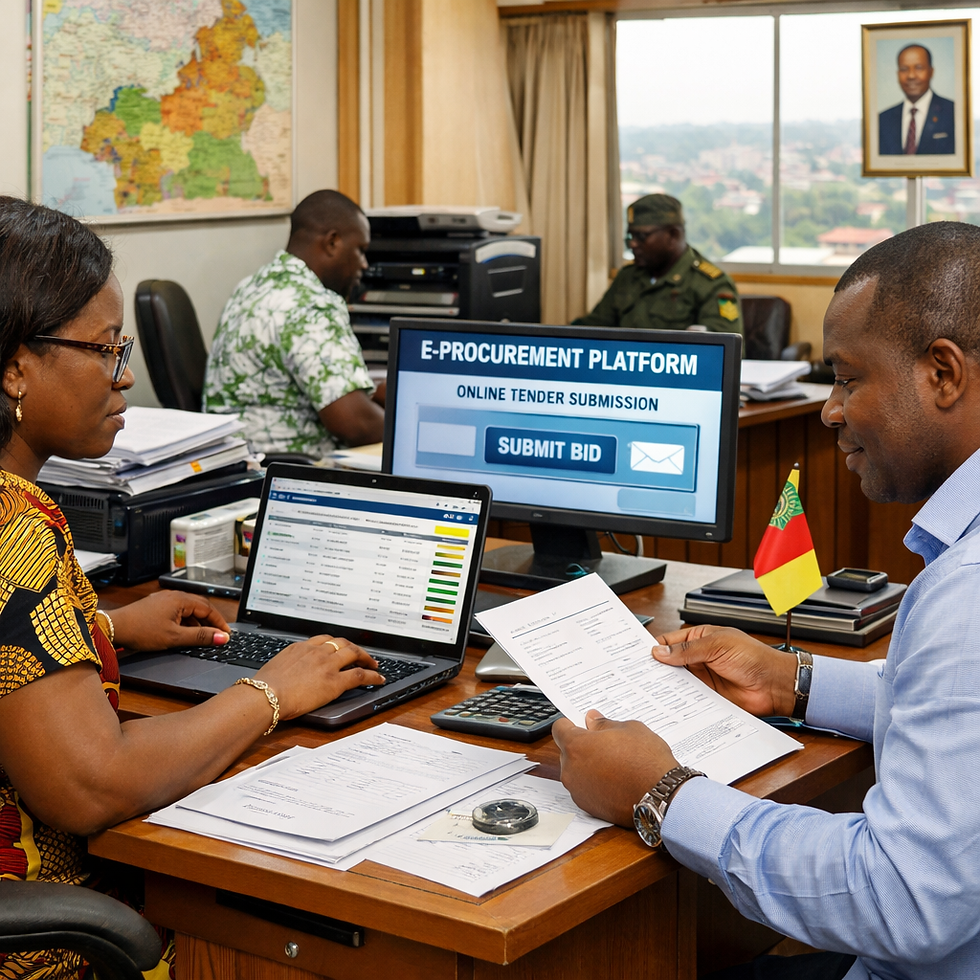
The move to full dematerialization on COLEPS is not merely a technological upgrade; it's a strategic pivot designed to enhance transparency, efficiency, and accountability in a sector historically prone to challenges. Companies looking to secure contracts in works, supplies, or services must now fully embrace digital submission methods. The days of physically delivering stacks of documents are definitively over. For international bidders, this presents both a challenge and an opportunity: streamlining the bidding process while requiring a thorough understanding of the local digital ecosystem. Staying informed on these developments is critical, which is why platforms like TendersGo regularly update their information to reflect such significant policy changes.
Cameroon's Legal Framework: The Bedrock of E-Procurement
At the core of Cameroon’s procurement system is the Public Contracts Code, specifically Law No. 2018/007 of 3 July 2018. This foundational legislation outlines the principles, procedures, and scope of public contracts. Articles 1-5 lay out the general principles, while Articles 20-35 detail the various procurement procedures. Crucially, Articles 65-70 already mandated e-procurement, setting the stage for the current digital imperative. This law is further elaborated by Decree No. 2019/280 of 20 June 2019, which specifies the application modalities. These documents form the legal backbone that underpins every public contract in Cameroon.
The 2026 Circular from the Minister Delegate at the Presidency in charge of Public Contracts, Ibrahim Talba Malla, is the latest and most impactful reform. It unequivocally states that full dematerialization via COLEPS is mandatory for all procedures. This means even contracts previously exempt, such as those awarded by mutual agreement, must now navigate the digital platform. There are limited derogations for statutorily excluded project owners in 2026, but these are exceptions to a very firm rule. Furthermore, all tender publications, including addenda and award notices, must be simultaneously published on COLEPS and the Journal des Marchés Publics (JDM). This dual publication ensures wide dissemination and legal compliance, making it easier for companies to find Cameroon tenders .
The Role of MINMAP and ARMP in Digital Oversight
The Ministry of Public Contracts (MINMAP) stands as the primary authority overseeing public procurement in Cameroon. Headed by Minister Ibrahim Talba Malla, MINMAP is responsible for formulating policies, regulating the sector, and ensuring the smooth functioning of the procurement process. Complementing MINMAP is the Agence de Régulation des Marchés Publics (ARMP), the independent regulatory body established by Articles 10-12 of Law No. 2018/007. ARMP's mandate includes overseeing compliance, conducting audits, and providing a mechanism for dispute resolution. For bidders, understanding the distinct roles of these two bodies is vital, especially when navigating complaints or seeking clarification on procurement matters.
In this new digital era, both MINMAP and ARMP play a critical role in enforcing the COLEPS mandate. ARMP notices, like the verified Example (ARMP Notice 60658, 2026) which details a tender file fee of 50,000 CFA francs and a submission deadline of March 31, 2026, are now exclusively integrated with the COLEPS system. The National Anti-Corruption Commission (CONAC) also maintains an oversight function, monitoring for any irregularities or corrupt practices within the procurement system. This multi-layered oversight aims to foster a more transparent and equitable bidding environment. For tender managers, tracking announcements from these bodies, often available through platforms like TendersGo's organization profiles , is a fundamental part of strategic planning.
Navigating COLEPS: Cameroon's Mandatory E-Procurement Platform
The Cameroon Online E-Procurement System (COLEPS) has evolved into the sole official portal for public contracts in Cameroon. Accessible via www.publiccontracts.cm or www.marchespublics.cm , COLEPS is no longer just an option; it is the exclusive channel for all procurement activities as of 2026, mandated by Circular 000002/2026. Initially launched in 2018, the platform received a significant upgrade in 2026, thanks to a $12.5 million grant from the Korea International Cooperation Agency (KOICA). This upgrade introduced real-time monitoring capabilities, automated bid security verification, online contract signing functionalities, and crucial integration with local banks. The goal is a full rollout by 2028, with 2026 targeting 100% digitization.
Accessing and utilizing COLEPS requires an electronic certificate, underscoring the platform's commitment to security and authenticated user interaction. The system boasts 24/7 availability, theoretically allowing bidders to prepare and submit their documents at any time. This digital infrastructure is designed to streamline every step of the procurement cycle, from tender publication to contract award and payment. For any business, particularly international ones, the first step to engaging in Cameroon's public sector is to understand and register on COLEPS. This platform is where all official communication, document submission, and evaluation processes now occur, making it an indispensable tool for market entry.
Bidding Thresholds and Accepted Methods on COLEPS
Cameroon's procurement system employs specific thresholds to determine the type of bidding procedure. For contracts equal to or exceeding 100 million CFA francs for works, supplies, or services, National Competitive Bidding (NCB) applies, as stipulated in Article 24 of Law No. 2018/007. International Competitive Bidding (ICB) becomes mandatory for contracts valued at 1 billion CFA francs or more, or for projects financed by international donors (Article 25). Even direct awards or mutual agreements, previously less formalized, are now processed via COLEPS, limited to contracts under 50 million CFA francs or in emergency situations (Article 28).
All accepted bidding methods, as outlined in Articles 20-30 of Law No. 2018/007, are now fully dematerialized and conducted through COLEPS. This includes Open Competitive Bidding (Art. 22), Restricted Bidding (Art. 23), Limited Bidding (Art. 26), and Framework Agreements (Art. 29). The Circular 000002/2026 explicitly mandates online processing for all these methods. This means that whether a company is pursuing a large infrastructure project under ICB or a smaller supply contract, the entire process, including publication of notices, addenda, and award decisions, will be managed and tracked within the COLEPS environment. For detailed search criteria and filtering options to identify relevant tenders, TendersGo offers advanced tools that can help narrow down opportunities by value, sector, or method.
Required Documents and Bid Security in the Digital Era
The shift to COLEPS means that all required documents for bid submission must be submitted exclusively online. This is a critical point for bidders, as any attempt at offline submission will lead to disqualification. Based on Circular 000002/2026 and ARMP notices like 60658, the documentation typically falls into three categories: administrative, technical, and financial. Administrative documents include registration certificates, tax clearance certificates, and proof of insurance (Art. 42). Technical submissions require detailed qualifications, proposed methodology, and CVs of key personnel (Art. 43). Financial documents comprise unit prices, the bid form itself, and the mandatory bid security.
Acquiring the tender file also involves an online process, typically requiring an online payment, such as the 50,000 CFA francs non-refundable fee mentioned in ARMP Notice 60658. A crucial requirement for all submissions is an electronic signature or certificate, emphasizing the secure and authenticated nature of the COLEPS platform. Regarding bid security, it remains mandatory for open and restricted bids (Law No. 2018/007, Art. 44). The percentage typically ranges from 2-10% of the bid amount, often 2% for works and 5% for supplies/services, with the exact figure specified in each tender notice. A significant 2026 update, stemming from the KOICA upgrade, is the automated verification of bid securities through bank integration, streamlining a process that was once a common point of contention. This automation enhances transparency and reduces delays, offering a more efficient experience for bidders.
Evaluation Criteria and Complaint Mechanisms
Once bids are submitted via COLEPS, the evaluation process adheres to established criteria outlined in Articles 50-55 of the Public Contracts Code. The primary methods include "Lowest Price" for standardized goods and works, and the "Most Economically Advantageous Tender" (MEAT) for more complex procurements. MEAT typically involves a weighted scoring, often with a 70/30 split between technical and financial proposals, prioritizing overall value over just cost. For highly complex services or consulting, a "Quality-Cost Based" approach might be used, where quality can account for up to 80% of the evaluation. The COLEPS platform facilitates automated preliminary checks, ensuring basic compliance before detailed evaluations commence.
Should a bidder have grounds for complaint or appeal, Cameroon's system provides a clear recourse mechanism. According to Articles 60-64 of Law No. 2018/007 and Decree 2019/280, a bidder can lodge an appeal with ARMP within five days of the award publication. This process is now rationalized and often initiated via COLEPS, following recent Prime Ministerial directives. If the ARMP decision is unsatisfactory, a judicial appeal can be made to administrative courts within 30 days. This multi-tiered system ensures that bidders have avenues to challenge decisions, although understanding the strict timelines and proper procedures is paramount. Regular reports on petitions are mandated, further enhancing transparency. For companies, having a reliable source for tender announcements and award notices, such as those found on TendersGo's search interface , is crucial for monitoring these critical timelines.
International Bidders: Language, Payments, and Local Nuances
For international bidders, Cameroon's bilingual status is a key consideration. The country operates with both French and English as official languages, as per its Constitution and Article 3 of Law No. 2018/007. Tenders published on COLEPS are always bilingual, and bids are accepted in either language, with English often preferred for Anglophone regions. This dual language requirement means that international firms must ensure their proposals are prepared in one of these official languages, or professionally translated, to avoid disqualification. Competent translation services are a must, as any ambiguity can lead to rejection.
Payment terms and conditions for contractors generally follow standard practices. An advance payment of 20-30% is typically granted upon submission of a performance guarantee (Art. 70), with subsequent progress payments tied to certified milestones. A retention of 5-10% of the contract value is common, held until provisional acceptance of the works or services. Performance bonds, usually 5-10% of the contract value, are also standard and, like bid securities, are now subject to automated verification through COLEPS-bank integration. Delays in project execution can incur penalties of 0.5% per day, capped at 10% of the contract value (Art. 75). These payments are primarily financed by the public investment budget, such as the 2026 PIB. While Cameroon is not a member of the WTO Government Procurement Agreement (GPA), projects financed by international development banks like AfDB or the World Bank adhere to their specific procurement guidelines, often requiring International Competitive Bidding regardless of the national thresholds. Understanding these nuances is vital for successful engagement, and TendersGo's AI assistance can help distill complex procurement rules.
The Future of Procurement: Dematerialization and Transparency
The trajectory of Cameroon's public procurement is clearly towards full dematerialization and enhanced transparency. The Circular No. 000002 of 19 February 2026 is not merely an administrative update; it’s a zero-tolerance policy that cements COLEPS as the sole gateway for all public contracts. The significant KOICA grants, totaling $25 million for upgrades and interoperability between 2026 and 2028, underscore the commitment to this digital transformation. This investment aims to achieve 100% digitization by 2028, with a robust national training campaign launched by MINMAP between 2025-2026 to ensure widespread adoption among both public sector entities and private bidders.
These reforms, coupled with Prime Ministerial directives to generalize COLEPS and streamline petition processes, signal a more efficient and accountable procurement environment. For bid managers and businesses seeking opportunities in Cameroon, the message is clear: embrace COLEPS, understand its intricacies, and integrate digital practices into your bidding strategy. Platforms like TendersGo, with its worldwide tender search engine covering 220+ countries and 145 languages, become an invaluable ally, offering unlimited email alerts, PDF document viewers, and classification tools like CPV/NAICS/UNSPSC to help identify relevant tenders and stay ahead of the curve. The future of public procurement in Cameroon is digital, and preparedness is the key to unlocking its potential.





